Quelfire Product Training at RES Systems Ltd – June 2021

Quelfire Product Training at RES Systems Ltd.

RES were recently given expert product training in the Quelfire range of fire stopping products by Fire Containment Specialist Malcolm Williams from Quelfire. The aim of the training is to give installation experts the guidance and know-how on typical applications for fire stopping products.

Malcolm Williams, Fire Containment Specialist, Quelfire

Quelfire

Quelfire is one of the leading manufacturers and suppliers of Specialist Firestopping Products for buildings and is a well-trusted brand that’s renowned for its long-standing commitment to high-quality, certified products, including fire containment systems for pipe, duct and electrical service penetrations.

The Training

The RES passive team were provided with an in-depth presentation and demonstration covering the rigorous testing that takes place on the Quelfire products, industry legislation, why passive fire protection is so critical, how the products work and detailed installation guidance.
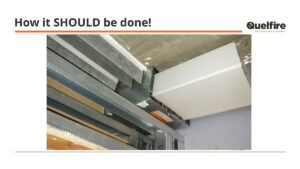
Fire stopping prevents the spread of fire (heat, flames, fumes) and increases the opportunity for safe egress from a building.
It is therefore essential that any Fire Stopping product is correctly installed as per the manufacturers guidance.

The Quelfire Fire Stopping System

Quelfire provide a Fire Stopping System comprising a range of high quality individual products that are tested as a complete system. Their products are tested to current BS and BS EN Standards and are CE Marked as per the Under The Construction Products Regulation (CPR).
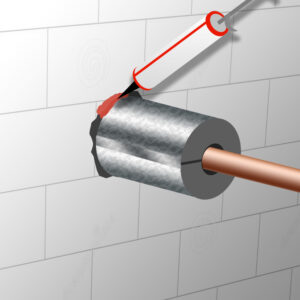
Following on from the training, RES will continue to work closely with Quelfire on all our Fire Stopping projects.

RES Passive Fire Protection

RES provide a range of Passive Fire Protection such as Fire Stopping and Fire Doors and have FIRAS Accreditation.

We cover the South of England including the counties of Middlesex, Essex, Kent, East Sussex, West Sussex, Surrey, Hampshire, Dorset, Wiltshire, Gloucestershire, Berkshire, Oxfordshire, Buckinghamshire, Hertfordshire including London, Brighton, Portsmouth, Southampton, Winchester, Bristol, and the surrounding towns of Aldershot, Basingstoke, Beaconsfield, Bracknell, Cirencester, Egham, Farnham, Guildford, Henley on Thames, High Wycombe, Maidenhead, Marlow, Newbury, Oxford, Poole, Reading, Slough, Staines, St Albans, Staines, Swindon, Watford, Windsor, Woking, Wokingham and Worthing.
New Evacuation Alert Systems – May 2021

New Evacuation Alert Systems.

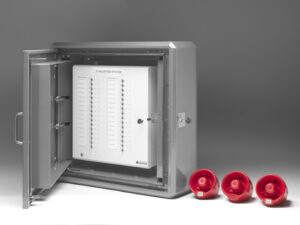
New evacuation alert systems are coming onto the market that facilitate the safe and orderly evacuation of buildings containing flats.

In the aftermath of the Grenfell tragedy the fire industry responded with the introduction of a new standard BS 8629:2019. The code of practice for the design, installation, commissioning, and maintenance of evacuation alert systems for use by fire and rescue services in buildings containing flats.

Below are details of two new products that have come to our attention.


Advanced.

EvacGo – Evacuation Alert System


Advanced have brought out the EvacGo – Evacuation Alert System. Advanced have worked closely alongside fire industry experts who wrote the standard to create our BS 8629 solution and are custom manufacturing our EACIE (Evacuation Alert Control & Indicating Equipment) to reflect each individual building’s evacuation zones.


C-TEC.

EVAC Alert


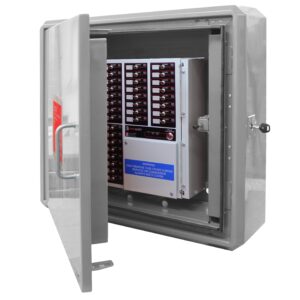
Another solution comes from C-TEC, called the EVAC Alert. This 8629: 2019 compliant evacuation alert system specifically designed to assist the fire and rescue services in evacuating high-rise residential buildings in fire emergencies.


British-built and comprising a range of evacuation alert panels, single and multi-way flat interface units, self-testing evacuation alert sounders and Equality Act-compliant visual indicators and vibrating pillow pads, EVAC-ALERT facilitates the safe and orderly evacuation of buildings containing flats.


Check out the product video here …


FIA GUIDANCE.

FIA - Fire Industry Association

Read the full FIA Guidance on BS 8629:2019

https://www.fia.uk.com/news/guidance-notefia-guidance-document-bs-8629-2019.html


The installation of Evacuation Alert Systems is covered by the BAFE SP207 Design, Installation, Commissioning and Maintenance of Evacuation Alert Systems Scheme.

RES will bring you further updates on this later in the year.

Fire Door Safety Week – 21- 27 September 2020

Fire Door Safety Week – 21- 27 September 2020

RES are once again supporting Fire Door Safety Week by helping to spread the word on the importance of correctly fitted and maintained Fire Doors.

Everyone can play their part in ensuring a fire door performs as it should, from the manufacturer through to the building users, and this is why the annual Fire Door Safety Week campaign exists.

During the event week we aim to post articles and information in support of our Fire Door services:

  • Fire Door Installation
  • Fire Door Inspections and Maintenance
  • Fire Door Repairs
  • Fire Door Guidance, Advice and Training

For more information about Fire Door Safety Week

https://www.firedoorsafetyweek.co.uk/

https://twitter.com/FDSafetyWeek

https://resfire.co.uk/fire-doors-london-reading/

#FIREDOORSAFETYWEEK

Natural and mechanical ventilation systems

Natural and mechanical ventilation systems

RES Fire Protection Engineers offer help to repair and service/maintain smoke ventilation systems installed within a building. We cover businesses and residential premises across the south of England.


Smoke control/ventilation systems can be divided into natural/passive or mechanical systems.


A natural ventilation system relies on the natural movement of smoke and hot gasses, venting these through an opening. The opening can be a window, vent or a ventilation shaft, these can be permanently open, be manually opened or have an automatic opening mechanism attached to them. Automatic Opening Vents (AOVs) can be opened by actuating arms attached to windows, hatches or doors etc and activated by local smoke detectors which automatically open that vent. The AOVs normally have a local manual back up switch/button (a call point) as well. Once opened/activated the vents allow smoke and heat to leave the building/area, offering a safe means of escape for occupants, with greater visibility and access for fire-fighters.

Natural systems also offer normal ventilation and allow a natural flow of air to enter a building.


Mechanical ventilation systems extract heat and smoke from a building by using mechanical means, fans etc and forced air movement. Mechanical ventilation is normally interlinked with the Buildings Management System (BMS) and incorporates a control panel, secondary power supplies, dampeners that operate to blocking smoke from entering a floor where there is no fire, but opening on the fire floor to allow smoke to leave etc.


Mechanical smoke control systems include Smoke Pressurisation Systems (SPS) these are designed to stop smoke circulating by introducing clean air into the stairwells etc. This increases the air pressure in the stairwell and reduces air pressure in other areas to create safe and clear escape route for building occupants as well as a rescue route for firefighters.


Maintenance of these systems has to not only check each element is intact but that each is talking to the main control systems that govern them.


Smoke control/ventilation systems are a requirement of the Building Regulations.


Smoke control/ventilation systems with RES Fire Protection Engineers


Our experienced team of engineers can maintain, repair or replace installed smoke control /ventilation systems within a building, including extraction systems for car parking areas.


We work with systems manufacturers and accredited service and maintenance providers to ensure that smoke control/ventilation systems we work on adhere to current legislation and requirement.


We cover the South of England, London, Berkshire, Middlesex, Surrey, Oxfordshire, Hampshire, Buckinghamshire, Hertfordshire, Essex, Kent, West & East Sussex.

Fire Extinguisher Service

A fire extinguisher is an essential piece of fire-fighting equipment that needs to work straight away when it is required by a user. It has to be reliable at all times – which means that business owners must ensure that fire extinguishers are regularly checked and serviced. As they are highly pressurised, fire extinguishers always carry the risk of bursting or causing injury to others. According to the Regulatory Fire Reform (Fire Safety Order) 2005, all fire-fighting equipment (including extinguishers), must be well-maintained and kept in efficient working order/repair.


Fire extinguisher servicing

There are two different types of fire extinguisher service – a visual inspection and annual maintenance. In a visual inspection, an inspector will check the location of the extinguisher to determine that it is located in the correct place, where it can be easily seen and accessed. The instructions will be checked to ensure that they are facing outwards where they can be easily and clearly read, and the overall condition of the extinguisher will be checked to determine whether it has already been used, and whether it has suffered any damage or has any missing parts. Tamper indicators are checked to see if they have been broken.


In an annual maintenance service, as well as a visual inspection, a fire extinguisher needs to be checked for corrosion, and assessed to see whether it needs to be refilled or re-pressurised. Most fire extinguishers (water, foam and powder) need discharge testing every five years. If you have a CO2 fire extinguisher, this will need a pressure test every 10 years to insure the cylinder is safe to continue to be pressurised and a new valve will be installed. You can have your extinguisher refurbished in this way, or in some cases it may be worth purchasing a new fire extinguisher.


As a business-owner, you are legally obliged to effectively maintain your fire-fighting equipment so that your staff and visitors are protected. At RES Protection Engineers, the servicing process is straightforward and affordable. When you have a fire extinguisher service with us, our BAFE registered technicians will carry out inspections and servicing in accordance with BS 5306. Following the service, you’ll receive the relevant documentation required. We can also service portable fire extinguishers, hose reels, trolley units and fire blankets to ensure that they are suitable for use in line with current legislation. All services are undertaken by BAFE registered technicians. We also offer an emergency call-out service, here for you 24 hours a day, 7 days a week.


Fire extinguisher sales and hire


Do you require a new fire extinguisher for your business? We can meet your requirements. All of our fire extinguishers are produced to European Standard EN3, and come with a five year guarantee. We offer discounts for large quantity orders. If you’d rather hire a fire extinguisher, we can provide hire services for up to six months.


Fire extinguisher service from RES


If you require fire extinguisher servicing, maintenance or repairs, RES engineers can carry out a comprehensive and affordable service. Our fire extinguisher services cover the South of England including the counties of Middlesex, Essex, Kent, East Sussex, West Sussex, Surrey, Hampshire, Dorset, Wiltshire, Gloucestershire, Berkshire, Oxfordshire, Buckinghamshire, Hertfordshire including London, Brighton, Portsmouth, Southampton, Winchester, Bristol, and the surrounding towns of Aldershot, Basingstoke, Beaconsfield, Bracknell, Cirencester, Egham, Farnham, Guildford, Henley on Thames, High Wycombe, Maidenhead, Marlow, Newbury, Oxford, Poole, Reading, Slough, St Albans, Staines, Swindon, Watford, Windsor, Woking, Wokingham and Worthing.

Fire Blankets

The importance of a fire blanket

In the case of a fire, a fire blanket helps to control flames and extinguish fires that are most commonly caused by cooking oils in kitchens. You can also use a fire blanket if clothing is on fire, or if an item such as a waste bin has caught alight. By covering the fire with a fire blanket, the supply of oxygen is cut to the fire, minimising its spread. At RES Fire Protection Engineers, our fire blankets have been certified and tested to the most stringent requirements of BS EN 1869:1997.

In a business premises, the most frequent location of a fire blanket is in a kitchen area, where cooking equipment is located. A fire blanket should always be positioned at least two metres away from a cooker, and fixed to the wall. When a fire occurs in a kitchen, it is normally on or around the cooker. To use a fire blanket, pull out the blanket from its pouch and hold the blanket between you and the fire. Protect your hands by inserting them into the sleeves of the fire blanket, keeping your fingers away from exposure as you are holding it. Place the fire blanket over the fire and step back immediately. Do not attempt to try and lift up the fire blanket until you are sure that the fire has been put out. Fire blankets should be discarded after use and not re-used.

Using a fire blanket

For a fire to burn and quickly spread, it requires fuel, heat and oxygen. A fire blanket is used to cut off this supply of oxygen to a fire, and should successfully put it out completely. A fire blanket must be sealed around the fire for it to work effectively, to stop oxygen from getting to the flames. Fire blankets usually have two ‘tails’ that are visible from its packaging. When using a fire blanket, you should place one hand on each tag ‘tail’ and pull simultaneously to remove the blanket from its packaging. If a person’s clothing is on fire, you should use a fire blanket in the same way and make sure that it is correctly sealed around the fire to prevent air escape.

Fire blanket installation and servicing

If you require fire blankets for a business environment, they should receive an annual service along with your other fire-fighting equipment. Service charges for fire blankets are usually half of that for extinguishers, and having your fire blanket serviced can save lives. An RES engineer will unpack the blanket and carry out a full inspection to ensure that the quality of the blanket still meets the legally required standard before placing it back into its packaging. An engineer will check for signs of wear, stains and any other types of oil staining, and will inform you of any holes in the blanket that may stop the blanket from working properly in the case of a fire. You will receive a certificate containing details of the fire blanket service.

Fire blankets from RES

At RES, we provide fire blankets that meet the most stringent requirements of BS EN 1869:1997. Our services cover the South of England including London, Berkshire, Bracknell, Windsor, Middlesex & Surrey, Oxfordshire, Hampshire, Buckinghamshire, Hertfordshire, Essex & Kent,

Supporting Macmillan Cancer Support at Christmas

This Christmas we’re making a donation to Macmillian Cancer Support instead of gifts to customers and staff.

About Macmillian Cancer Support
In 2015, Macmillan Cancer Support reached 5.8 million people affected by cancer.
Macmillan is the leading expert on the numbers, needs and experiences of people affected by cancer in the UK


If you wish to make your own donation goto https://www.macmillan.org.uk/donate

Thank you

RES Systems Ltd

Fire Stopping

What is fire stopping?

Fire stopping is an essential fire-prevention technique to stop a fire from spreading throughout a building. It involves the sealing of gaps or other openings through which fire, smoke and heat could pass through (either vertically or laterally). It is vital that the correct fire stopping methods are installed to prevent a fire from escalating.

Fire stopping prevents fire from spreading by creating fire resisting compartments that subdivide a building either vertically or horizontally. This ensures that a fire is contained within a compartment. For the fire to be contained however, any openings or gaps must be correctly sealed and fire-resistant walls and floors installed. Gaps must also be sealed between fire resisting constructions, i.e. gaps between walls and the floors above them. This ensures that a substantial barrier is constructed.

Types of fire stops

RES Fire Protection Engineers use various types of fire stopping methods, including:

Fire sleeves

A fire sleeve is intended to seal an aperture that has been created by electrical cabling or pipes passing through a fire-rated wall, ceiling or floor. If a fire breaks out and heat spreads, the sleeve opens out and expands to fill any gaps. If plastic pipes pass through a wall and a fire sleeve is installed near them, the sleeve will seal off the pipe by crushing it, preventing smoke and fire from passing through.

Fire collars

Fire collars cover pipes with flame retardant compounds that expand to stop the fire from reaching the pipes and potentially spreading to other areas.

Fire covers 

Fire covers are designed to cover indoor luminaires. If a fire breaks out, the cover expands to fill space with a high level of insulation that is fire-resistant.

Gap fillers and fire sealants

These products expand upon contact with high heat or fire, and work to seal gaps and prevent the spreading of smoke and flame. Different sealants can be used for different purposes.

Why do fire stopping methods need to be used?

In order to keep the occupants of a building safe, it is important that a building has the proper fire stopping methods installed to prevent fire spread. RES is BM Trada Q-Mark certified for penetration sealing systems.

Fire stopping methods can save lives if implemented correctly. Every building layout is different, therefore different fire stopping methods will be required. A successful fire stopping system works when all fire stop products are working together to prevent fire from spreading. If one product fails, the rest of the system could fail. RES Fire Protection Engineers offer expert fire stopping services and advice as part of our Passive Fire Protection solutions to ensure that building gaps and voids are correctly sealed and fire resistant. We can advise on the correct fire stopping solutions for your premises. We cover the South of England including London, Berkshire, Bracknell, Windsor, Middlesex & Surrey, Oxfordshire, Hampshire, Buckinghamshire, Hertfordshire, Essex & Kent, West & East Sussex, Reading, Maidenhead, Slough, Newbury and the surrounding areas.

Smoke Control and Ventilation Systems

What is a smoke ventilation system?

Smoke control and ventilation systems can be either natural or mechanical systems that vent smoke out of a building to enable low level escape routes to be kept clear of smoke, aiding visibility in the case of an emergency. This makes it easier for occupants to escape from a fire, and also prevents further damage to a building. Different premises will have different needs for smoke control and ventilation systems depending on their size, style and the number of occupants within them. According to statistics published by the UK Government, the most common cause of death in the instance of a fire is a person being overcome by gas or smoke, leading to loss of consciousness and eventual loss of life.

An effective smoke control and ventilation system is therefore crucial in order to keep smoke away from commonly used areas in a building such as corridors, safety routes, staircases and lobbies. If a fire breaks out, an effective smoke detector should activate on every floor of a building, ensuring that occupants can easily and safely escape while the fire is in a state of infancy.

Natural versus mechanical ventilation systems

There are two main types of smoke control and ventilation systems – natural and mechanical. Natural ventilation systems use the natural movement of hot gasses to vent smoke through a ventilator. Natural systems use windows, vents and automatic opening vents (AOVs), and are used as part of UK Building Regulations. Natural systems can also offer everyday air ventilation. Mechanical systems require extraction and removal of smoke by forcing it through fans.

 The need for replacement air

It is essential to have a supply of replacement air that takes the place of gasses and smoke that is extracted from a building. If replacement air doesn’t come in to a building, it will become depressurised. This air supply can be sourced from natural ventilators that are in a remote position away from a fire, automatic doors or from inlet ventilators that are positioned near the floor.


 Why install a smoke ventilation system?

A smoke control and ventilation system greatly reduces the chances of building occupants choking or being overwhelmed by smoke. It reduces the risk of smoke inhalation around escape routes such as corridors and staircases, and makes it easier for emergency services to access a building. A well-implemented smoke control and ventilation system can reduce the risk of a fire developing and limit smoke damage to a building (as well as the equipment inside it such as computers and other technical equipment, or even personal possessions).

How do smoke detectors work?

A smoke control and ventilation system is activated by smoke detectors. Once activated, the system should force a natural flow of air into a building while smoke is removed.

Smoke control and ventilation systems with RES Fire Protection Engineers

We can design and commission a smoke control and ventilation system to suit the needs of your premises whilst meeting UK Building Regulations. We work with systems manufacturers and accredited service and maintenance providers to ensure that all systems we install comply with current legislation. Our experienced installers ensure that your ventilation system is installed correctly and on time. Our highly trained engineers will thoroughly test the installed system before handover. We offer smoke control and ventilation systems services covering the South of England including London, Berkshire, Bracknell, Windsor, Middlesex & Surrey, Oxfordshire, Hampshire, Buckinghamshire, Hertfordshire, Essex & Kent, West & East Sussex, Reading, Maidenhead, Slough, Newbury and the surrounding areas.