Fire Detection and Alarm Systems Guide
Fire Detection and Alarm Systems Guide
Fire detection and alarm system regulations can seem complex. If you are a landlord, property manager, facilities manager or developer this guide will help you understand the basics. As fire safety professionals, RES are well versed in the various British Standards and fire alarm regulations, and our aim is to always advise and guide our customers.
Key Standards Explained
The main British Standard for fire alarms is the BS 5839 series, with BS 5839-1:2025 covering non-domestic buildings (commercial, public) and BS 5839-6 for domestic premises, providing guidelines for designing, installing, commissioning, and maintaining effective systems for life and property protection.
BS 5839-1:2025 published in April 2025 (replacing the 2017 edition), is the updated code of practice for designing, installing, commissioning, and maintaining fire detection and alarm systems in non-domestic UK premises. This is the primary code of practice for Grade A fire detection and alarm systems in workplaces, schools, hospitals, etc. focusing on Categories (L for Life, P for Property, M for Manual) and system design for effective alerts and evacuations.
BS 5839-6:2019+A1:2020 is the code of practice for the design, installation, commissioning and maintenance of fire detection and fire alarm systems in domestic premises including houses, HMOs, and sheltered housing. It sets out recommendations on the appropriate grade (A, C, D and F) of fire alarm system, the correct siting and selection of fire alarms, and the methods for testing and commissioning systems to ensure they operate as intended.
The standard also details the information that should be provided to the end user, the documentation and certificates that should be issued upon completion, and the ongoing responsibilities for inspection, testing and maintenance
Fire Alarm Grades
Fire alarm grades describe the type and quality of system installed, primarily relating to power supplies, system complexity, and control equipment.
Grades range from A (the highest) to F (the lowest).
Domestic premises typically use Grades D–F, while most commercial and higher-risk premises require Grades A–C.
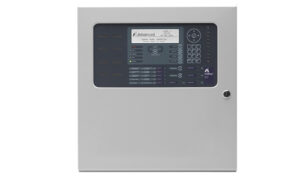
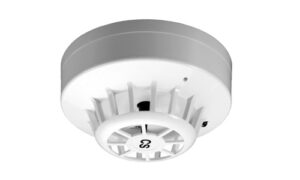
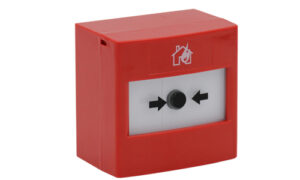
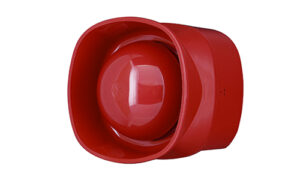
Grade A: A fully featured fire alarm system incorporating automatic detectors, manual call points, alarm sounders, and a central control and indicating panel. These systems must comply with BS 5839-1 (commercial premises) or BS 5839-6 (domestic premises where applicable) and use components conforming to BS EN 54 standards. Grade A systems are standard for most commercial, industrial, and multi-occupied premises.
Grade C: A system comprising detectors and sounders interconnected to a common power supply, typically mains powered with a standby supply, but without a full control panel.
Grade D1: Mains-powered detectors with a tamper-proof battery backup.
Grade D2: Mains-powered detectors with a user-replaceable battery backup.
Grade F1: Stand-alone battery-powered detectors with sealed, tamper-proof batteries.
Grade F2: Stand-alone battery-powered detectors with user-replaceable batteries.
Important note: The fire alarm grade should be determined (along with the category) by a fire safety specialist (competent person), such as fire engineers, fire risk assessors by way of the premises Fire Risk Assessment or Enforcing Authorities.
Fire Detection and Alarm System Categories
While grades describe the system type, fire alarm categories define the level and purpose
of protection the system provides.
BS 5839 categorises fire alarm systems into M for Manual, L for Life and P for Property system.
Category M – Manual Fire Alarm Systems
Category M systems rely on occupants to raise the alarm manually when a fire is discovered. They typically use manual call points (break-glass units) positioned along escape routes and exits, connected to a building-wide alarm system. Manual systems are often used in low-risk premises, where staff are always present to raise the alarm and in conjunction with automatic detection systems. Smaller premises may use simple alert devices, though most commercial
buildings integrate manual call points into a Grade A system.
Category L – Life Protection Fire Detection Systems
Category L systems are automatic fire detection systems designed to protect life.
They are divided into five levels, offering increasing degrees of coverage.
Category L1: Systems installed throughout all areas of the building, providing the earliest possible warning in for example: sleeping accommodation, complex or large premises and buildings with delayed evacuation strategies.
Category LD1 – Maximum life protection for a domestic property
LD1 alarm systems are installed throughout domestic premises. Detectors are fitted in all areas that form escape routes and in all rooms and other areas, other than those that have a low risk of ignition, such as bathrooms and toilets. The goal is to provide the earliest possible warning for occupants to ensure the preservation of life.
Category L2: Systems installed only in defined parts of the building, including all parts necessary to satisfy the recommendations of the code for a Category L3 system. The additional areas protected, over and above those protected in a Category L3 system, are those in which there is either high likelihood of fire starting or a high risk to life if fire does start. L2 systems are commonly used in HMOs, residential care premises and buildings with higher fire risks.
Category LD2 – Additional life protection for a domestic property
LD2 fire alarm systems require detectors to be installed in circulation areas that form part of the escape routes, and in certain rooms or areas that present a high risk of fire to occupants. This would include a kitchen and a key habitable room in the building.
Category L3: Systems designed to give warning of fire at an early enough stage to enable all occupants other than, possibly those in the room of fire origin, to escape safely, before the escape routes are impassable due to the presence of fire, smoke or toxic gases. To satisfy this objective, fire detectors need to be installed in escape routes and, other than in the case of very short corridors, in all rooms or areas that open onto the escape routes. L3 is one of the most commonly specified categories for commercial buildings.
Category LD3 – Standard life protection for a domestic property
Category LD3 systems feature detectors in all areas that form escape routes from the property. Unlike LD2 systems, LD3 systems do not have to place alarms close to high-risk sources of ignition.
Category L4: Systems installed within those parts of the escape routes comprising circulation areas and circulation spaces, such as corridors and stairways. An L4 system is typically suitable for low-risk premises, single-storey building and offices with simple layouts.
Category L5: Systems in which the protected area(s) and/or the location of detectors is designed to satisfy a specific fire safety objective (other than that of a Category L1, L2, L3 or L4 system). L5 systems are risk-driven and tailored to the findings of the premises fire risk assessment.
Category P – Property Protection Systems
Category P systems are designed to protect property and business continuity, rather than life alone.
Category P1: Systems installed throughout all areas of the building and aim to detect fires at the earliest possible stage, reduce damage and minimise business disruption.
Category P2: Systems installed only in defined parts of the building such as high-risk or high-value areas e.g. plant rooms, storage areas and server rooms
Fire Alarm Specification
The specification of a premises fire alarm system (Grade and Category) typically rests with a fire safety specialist (competent person), such as fire engineers, fire risk assessors by way of the premises Fire Risk Assessment or Enforcing Authorities, with the role of a fire alarm system installation or maintenance specialist being there to make practical and advisory recommendations when either installing or maintaining systems.
The premises Responsible Person should ensure that the system either proposed or already installed satisfies the requirements of current legislation (or the legislation at the time of installation) and the insurer of the property by way of the premises fire risk assessment or seek further advice from a competent person or the relevant enforcing authority
Types of Fire Alarms under UK Regulations
There are three main types of Fire Detection and Alarm Systems:
■ Conventional
■ Addressable
■ Wireless
Conventional – Buildings are divided into wired zones
■ A fire alarm panel is used to identify the zone in the event of an alert ~
■ Suitable for small commercial properties or residential buildings where precise location reporting is not required.
Addressable – Exact location identification is possible from the specific device in the event of an alert due to unique addressing of the field devices
■ A fire alarm panel is used to display the specific location and zone of the alert
■ Suitable for larger and/or higher risk properties such as Schools, Care Homes, Hospitals.
■ Systems are scalable and flexible
Wireless – Exact location identification is possible from the specific device in the event of an alert due to unique addressing of the field devices (as per addressable system)
■ A fire alarm panel is used to display the specific location and zone of the alert (as per addressable system)
■ Uses a secure wireless signal to communicate with the devices and report back to the control panel
■ Suitable for Churches, Listed Buildings, Historic Properties, Commercial, Industrial, Residential
■ Systems are more scalable and flexible
RES can install all of these fire alarm types and we will always advise our customers on which type of system is most suitable and cost effective for your application.
Requirements for Installing Fire Alarms
Under UK regulations, a “competent person” should install your fire alarm system.
■ They should fully understand the latest relevant British Standards (BS 5839-1:2025 an or BS 5839-6:2019+A1:2020)
■ Understand the types of fire alarm systems available and how they work
■ Confirm the system specification of which category and grade to use in the premises
■ Be competent to design, install and commission the system

BAFE Accreditation Scheme
RES have undertaken as a business to adhere to the BAFE Accreditation Scheme for BAFE SP203-1 Fire Detection and Alarm Systems: Third-party certificated by BSI
BAFE Fire Safety Register – The trusted independent register of quality fire safety organisations for the UK since 1984
This provides our customers the knowledge that we are indeed competent to install fire alarm systems.
Maintenance and Testing of Fire Alarms
As per The Regulatory Reform (Fire Safety) Order 2005, all fire alarm systems should be adequately maintained in order to be effective in alerting occupants in the event of a fire. This means that fire alarms should be in perfect working order at all times.
And BS 5839-1:2025 recommends that fire alarm systems should undergo weekly testing by the responsible person. This is to ensure all components of the system, such as call points, are in working order.
In addition to this, professional fire alarm maintenance should be conducted at least twice a year by a competent person. This allows for a more comprehensive assessment and includes tests that can’t be performed during weekly checks, such as the inspection of control panels, detectors, and sounders.
At RES, our engineers are fully qualified to be able to carry out fire alarm system servicing.
Our Fire Detection & Alarm System Services
■ Design, Installation and Commissioning
■ Servicing and Maintenance
■ Additional Works
■ Fire Alarm System Upgrades
■ Fault Finding and Repairs
■ Regular Checks
Protecting People and Property Since 1985
For further reference:
Apollo pocket guide BS_5839-1:2025 (PDF)
FIA Guidance on BS 5839-1 Fire Alarm Categories (Web Page & PDF)
FIA Guide to the changes in BS-5839-1:2025 (PDF)
FIA Technical Bulletin A guide to fire detection and fire-alarm system zone-plans (PDF)
Hochiki BS 5839 – Part 1 vs Part 6 White Paper (PDF)
https://www.london-fire.gov.uk/safety/property-management/fire-alarms/ (Web Page)
Correct at time of publishing 29/01/2026. Every effort has been made to provide correct and accurate information. Please refer to the British Standards and the The Regulatory Reform (Fire Safety) Order 2005 for published information.
;)