FIRE EXTINGUISHER GUIDE 2026
Types of Fire Extinguishers
Along with ensuring you have the right types of fire extinguisher, you will also need to make sure that you select the right sizes and weights.
The various types of fire extinguisher put out fires started with different types of fuel – these are called ‘classes’ of fire. The fire risk from the different classes of fire in your business premises will determine which fire extinguisher types you need.
There are 6 main types of fire extinguisher, plus different variants of Water and Dry Powder extinguishers explained in more detail later in the guide.
■ Water
■ Foam
■ Dry Powder
■ Carbon Dioxide (‘CO2’)
■ Wet Chemical
■ Lithium Battery (Specialist)
There is no one extinguisher type which works on all classes of fire.
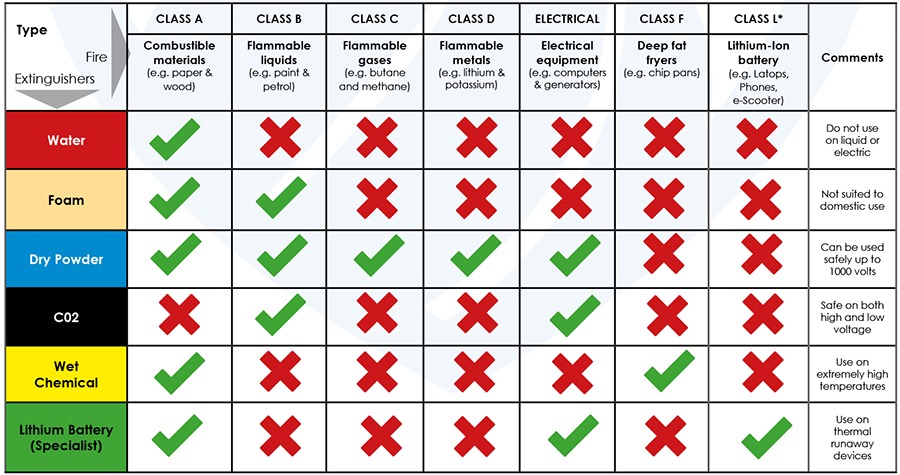
Below is a summary of the classes of fire, and a quick reference chart showing which types of extinguisher should be used on each.
We then provide a detailed explanation of each type of fire extinguisher.
Fire extinguisher colours
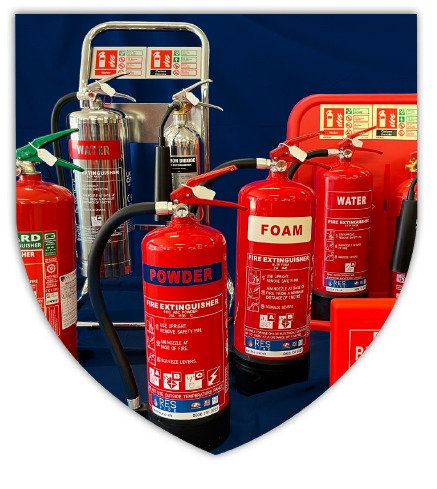
There are 6 fire extinguisher label colours: Red, Cream, Black, Blue, Yellow and *Green.
Each colour represents a different type of extinguisher, used on different types of fires.
The fire extinguisher colours changed in 1997 to meet British and European Standard BS EN3.
All modern fire extinguishers have a red (or chrome) body, with the identifying colour displayed in a wide band at the top of the extinguisher – as in the image below:
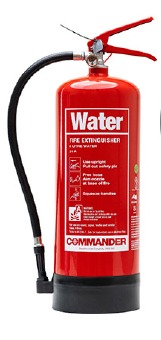
Red: Water
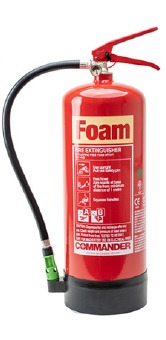
Cream: Foam
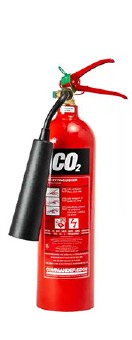
Black: C02
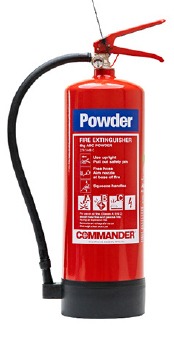
Blue: Powder
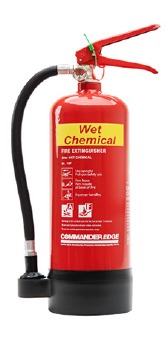
Yellow: Wet Chemical
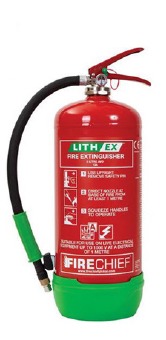
*Green: Lithium-ion Battery Fire (LFX/Lith-Ex)
* The British Standards Institution has published BS ISO 3941:2026 – Classification of Fires. This introduces Class L for lithium-ion battery fires. However, this class has not yet been incorporated in the BS EN 2 / EN 3 extinguisher fire rating system. (April 2026)
Why did the fire extinguisher colours change?
Up until 1997, the body of the extinguisher was usually made up of the entire distinguishing fire extinguisher colour.
For example, Co2 extinguishers would have been completely black, Foam extinguishers would have been completely cream, and powder extinguishers would have been completely blue.
The standard fire extinguisher colour was changed to ‘signal red’ for 2 main reasons.
Firstly, red is the colour associated with both danger and fire and so there is an obvious association with fire extinguishers.
Secondly, red is the colour most easy to see, especially in a darker environment, such as a smoke-filled room.
The only exception to the ‘red’ rule, is chrome extinguishers. Whilst these do not strictly conform to the guidelines, all chrome extinguishers in the UK are ISO 9001 quality supervised and tested against British Standard BS EN3.
We recommend using larger extinguisher ID signs with chrome extinguishers, to make them more visible.
See our separate Fire Safety Signage Guide
The different classes of fire
The different fire extinguisher colours tell you which classes of fire an extinguisher can be used on. Fire is a form of dry heat, but it comes in different forms. There are seven classes of fire: A, B, C, D, ‘Electrical’, F and now L*.

Class A fires – combustible materials:
– These are fires caused by flammable solids, such as wood, paper, and fabric
Class A fires – combustible materials:
– These are fires caused by flammable solids, such as wood, paper, and fabric

Class B fires – flammable liquids:
– These are fires caused by flammable liquids, like petrol, paint, or white spirits

Class C fires – flammable gases:
– These are fires caused by flammable gases, such as hydrogen or methane

Class D fires – combustible metals:
– These are fires caused by metals and chemicals such as magnesium, or potassium

Electrical hazards – electrical equipment:
– These are fires caused by electrical items, like heaters. Once the electrical item has been removed, the fire changes class, which means you can use a different colour fire extinguisher if necessary

Class F fires – cooking oils:
– Typically these are chip pan fires
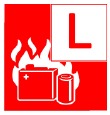
Class L Fires* – Lithium-Ion Battery Fires
– Class L fires involve lithium-ion cells and battery packs used in rechargeable devices and
energy storage systems.
Which extinguisher is used for each class of fire? – quick guide
Different types of fire extinguisher – a detailed guide
Water Extinguishers
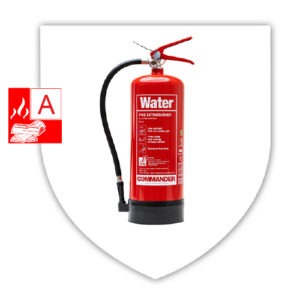
Water fire extinguishers are the most common extinguisher type for class A fire risk.
Most premises will require either water or foam extinguishers.
Extinguisher label colour: Bright Red

Use for: – Organic materials such as:
■ Paper and cardboard
■ Fabrics and textiles
■ Wood and coal

Do not use for:
■ Fires involving electrical equipment
■ Kitchen fires
■ Flammable gas and liquids
How water extinguishers work:
The water has a cooling effect on the fuel, causing it to burn much more slowly until the flames are eventually extinguished.
Types of premises/business who may need water extinguishers:
– Buildings constructed of wood or other organic materials
– Premises where there are organic materials to be found such as:
■ Offices
■ Schools
■ Hospitals
■ Residential properties
■ Warehouses
In fact, most buildings need either water or foam extinguishers.
Where to locate water extinguishers:
– By the exits on a floor where a Class A fire risk has been identified
Water spray extinguishers – what’s the difference?:
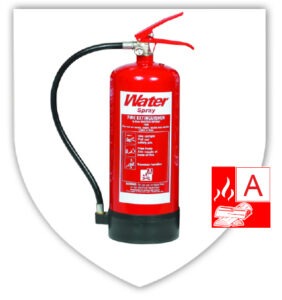
Water spray extinguishers are equipped with a spray nozzle, rather than a jet nozzle, meaning a greater surface area can be covered more quickly and the fire put out more rapidly.
Water spray extinguishers – what’s the difference?:
Water spray extinguishers are equipped with a spray nozzle, rather than a jet nozzle, meaning a greater surface area can be covered more quickly and the fire put out more rapidly.
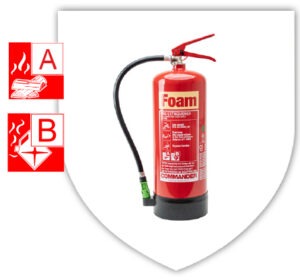
Foam extinguishers
Foam fire extinguishers are most common type of extinguisher for Class B fires, but also work on Class A fires as they are water-based.
Extinguisher label colour: Cream
Use for: – Organic materials such as:
■ Paper and cardboard
■ Fabrics and textiles
■ Wood and coal
■ Flammable liquids
Do not use for:
■ Kitchen fires
■ Fires involving electrical equipment
■ Flammable metals
How Foam extinguishers work:
As with water extinguishers, foam extinguishers have a cooling effect on the fuel. On burning liquids, the foaming agent creates a barrier between the flame and the fuel, extinguishing the fire.
Types of premises/business who may need Foam extinguishers:
– Buildings constructed of wood or other organic materials
– Premises where there are organic materials to be found such as:
■ Offices
■ Schools
■ Hospitals
■ Residential properties
■ Warehouses
– Buildings where flammable liquids are stored
In fact most buildings need either water or foam extinguishers
Where to locate Foam extinguishers:
– By the exits on a floor where a Class A or Class B fire risk has been identified
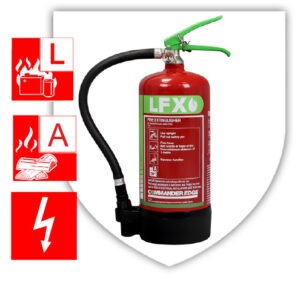
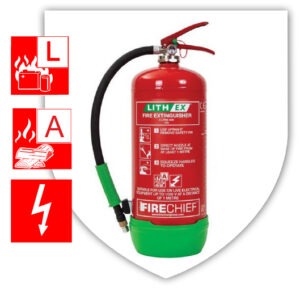
Lithium-Ion battery fire extinguishers*
Water fire extinguishers are the most common extinguisher type for class A fire risk.
Most premises will require either water or foam extinguishers.
Extinguisher label colour: Bright Red
Use for: – Battery powered equipment such as:
■ Mobile phones, laptops, e-scooters, e-bikes
+ Paper and cardboard
+ Electrical hazards
Do not use for:
■ Flammable liquids or gases
■ Flammable metals
■ Kitchen fires
LFX
LFX extinguishers are water-based, meaning they are Fluorine-free, whilst discharging as a foam which quickly absorbs the heat. As a result, the chain reaction which leads to thermal runaway breaks down, cooling down the battery and preventing other cells from overheating.
Suitable for homes, offices, workshops and repair stores with cordless tools, mobile phones, laptops, electric toothbrushes, toys, etc.
Lith-Ex
Using a non-toxic and revolutionary extinguishing agent, AVD (Aqueous Vermiculite Dispersion) is deployed as a mist which then creates a film over the surface which instantly dries to create an oxygen barrier, cools and prevents re-ignition. The Lith-Ex fire extinguisher is the only one which is safe to use on a lithium-ion battery and works even where a powder can’t.
Perfect for vehicles, aviation, marine, medical facilities and any premises with items which have lithium-ion batteries.
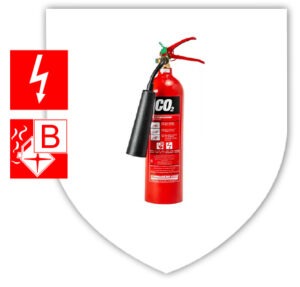
Carbon Dioxide (CO2) Extinguishers
CO2 fire extinguishers are predominantly used for electrical fire risks and are usually the main extinguisher type provided in computer server rooms. They also put out Class B fires (flammable liquids, such as paint and petroleum).
Extinguisher Label Colour: Black
Use for:
■ Flammable liquids, like paint and petrol
■ Electrical hazards – fires involving
electrical equipment
Do not use for:
■ Kitchen fires – especially chip-pan fires
■ Combustible materials like paper,
wood or textiles
■ Flammable metals
How CO2 extinguishers work:
CO2 extinguishers suffocate fires by displacing the oxygen the fire needs to burn.
Types of premises/business who may need foam extinguishers:
– Premises with electrical equipment, such as:
■ Offices
■ Kitchens
■ Construction sites
■ Server rooms
Where to locate CO2 extinguishers:
– Place near to the source of an electrical hazard and/or near the fire exits with a Class A extinguisher where electrical hazards are present.
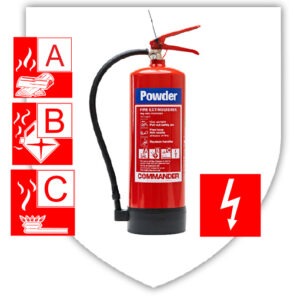
Dry powder extinguishers
Standard dry powder fire extinguishers are also called ‘ABC’ extinguishers because they tackle class A, B and C fires, however, they are not recommended for use in enclosed spaces. This is because the powder can reduce visibility, be easily inhaled, and also
the residue is very difficult to clean up after, causing damage to electrical equipment.
ABC powder extinguishers can also be used on some electrical fires. Specialist dry powder extinguishers are used for flammable metals.
Extinguisher Label Colour: Blue
Use for: – Organic materials such as:
■ Paper and cardboard
■ Fabrics and textiles
■ Wood and coal
+ Flammable liquids, like paint and petrol
+ Flammable gases, like liquid petroleum gas (LPG) and acetylene
+ Fires involving electrical equipment up to 1000v
Do not use for:
■ Fires involving cooking oil
■ Fires involving electrical equipment
over 1000v
■ or in enclosed spaces, such as offices, hosptals, schools or residential properties
where evacuation can be hindered.
How dry powder extinguishers work:
Dry powder extinguishers smother fires by forming a barrier between the fuel and the
source of oxygen.
Types of premises/business who may need Dry Powder extinguishers:
■ Businesses using flammable gases for chemical processes
■ Premises where welding and flame cutting takes place
■ Garage forecourts
■ Liquid petroleum gas (LPG) dispensing plants
■ Premises with large, commercial boiler rooms
Where to locate Dry Powder extinguishers:
– Place dry powder extinguishers near to the source of the fire risk.
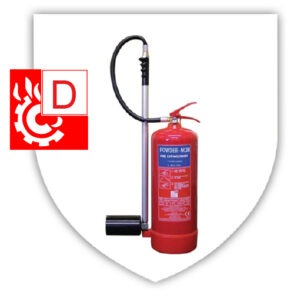
Specialist Dry Powder extinguishers – what’s the difference?:
Specialist dry powder extinguishers work in the same way as standard dry powder extinguishers but are for use with flammable metals only. There are 2 types of specialist dry powder extinguishers – ‘L2’ which only tackles lithium fires, and ‘M28’, for all other flammable metal fires.
Wet Chemical Extinguishers
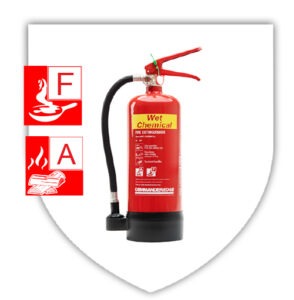
Wet chemical fire extinguishers are designed for use on Class F fires. What are Class F fires? In a nutshell, these involve cooking oils and fats. They can also be used on Class A fires although it is more common to have a foam or water extinguisher for this type of fire risk.
Extinguisher Label Colour: Yellow
Use for:
– Cooking oil/fat fires
– Organic materials such as:
■ Paper and cardboard
■ Fabrics and textiles
■ Wood and coal
Do not use for:
■ Flammable liquid or gas firesl
■ Electrical fires
■ Flammable metals
How wet chemical extinguishers work:
Wet chemical extinguishers create a layer of foam on the surface of the burning oil or fat, preventing oxygen from fuelling the fire any further. The spray also has a cooling effect.
Types of premises/business who may need wet chemical extinguishers:
■ Premises with commercial kitchens
Where to locate wet chemical extinguishers:
– Place near to the source of the fire risk.
Fire extinguishers - Options and accessories
P50 Fire extinguishers
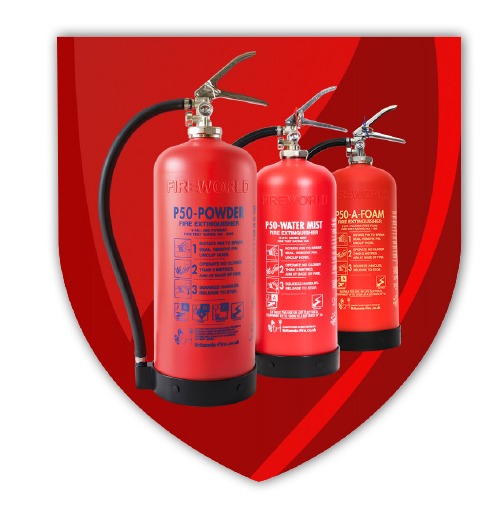
P50 fire extinguishers are low maintenance appliances that require a ten-year refill/service and have a twenty-year life cycle.
They are fully compliant with BS EN3 part 7, however, do not currently meet with British Standard BS 5306 parts 3 or 8. They are also not currently recognised by BAFE within their accreditation scheme BAFE SP101
Available as Powder, Water Mist, Foam and Class F.
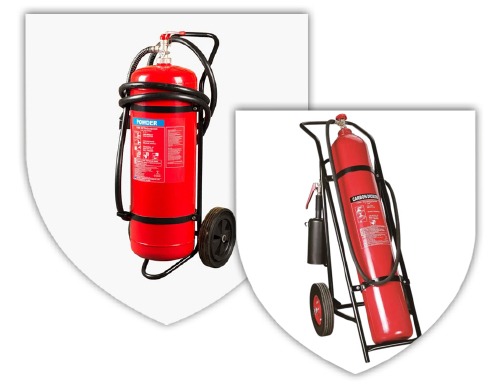
Trolley Units
Wheeled trolley units are designed to fight fires in many different environments including warehouses, petroleum sites, research sites and factories. Easy to manoeuvre, the wheeled trolley unit can be operated by one person.
Available in ABC Powder, C02, Foam and Lith-Ex variants.
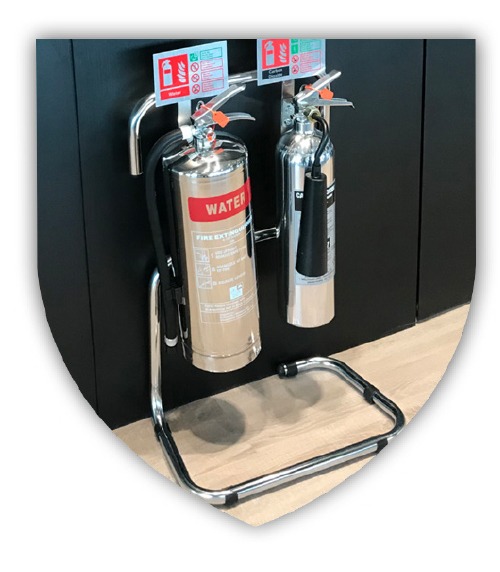
Stainless steel extinguishers
Polished stainless steel extinguishers are available in most extinguisher types such as C02, Water, Foam and Dry Powder. In addition to the aesthetics and design benefits over a traditional red extinguisher, they offer superior anti-corrosion resistance and durability benefits.
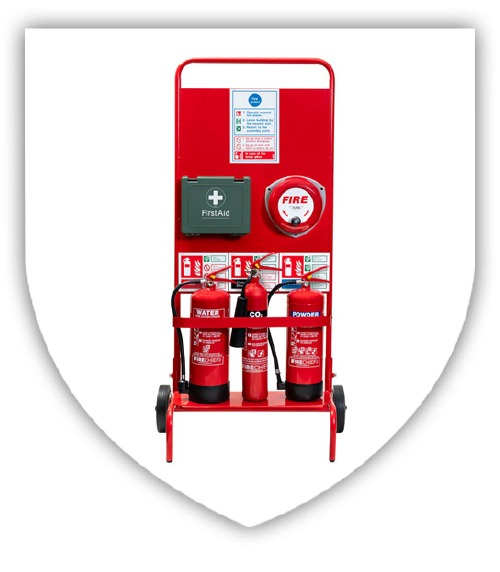
Mobile fire points
For environments like forecourts and construction sites, it isn’t always possible or practical to have fire extinguishers fixed to walls or limited to dedicated areas. This is where fire extinguisher trolleys and mobile fire points can help. They can have a manual hand bell and first aid kit with signage and accomodate two or three extinguisher types.
Extinguisher stands and signage
Available in single or double sizes, they are made from a single piece of durable plastic or metal wth a chrome finish, intended to provide a highly-visible location to store your extinguishers. Designed for indoor or outdoor use, they feature a high-grip finish for easy handling and a gripped base for stability. These tough stands easily stack together for storage and transportation with their minimalist and mostly flat design.
All installed extinguishers should be accompanied by a visible identification and usage sign. Fire Extinguisher Signs are crucial in an emergency.
See our separate Fire Safety Signage Guide
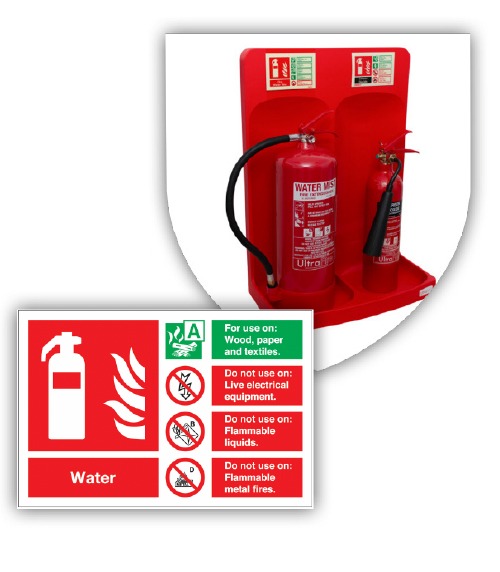
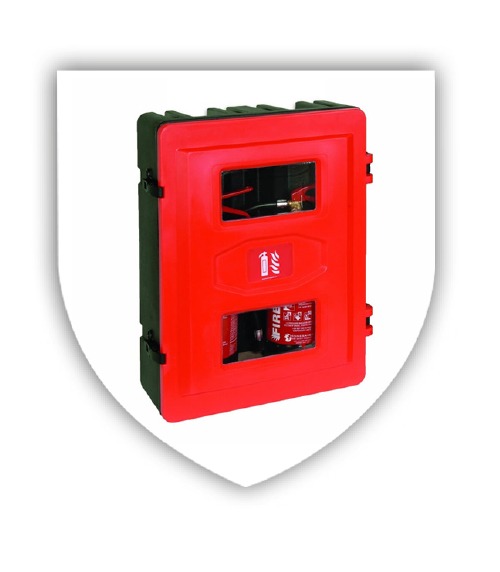
Fire extinguisher cabinets
Prevent misuse, vandalism, and damage from adverse weather as well as for use on vehicles. Available in single or double sizes.
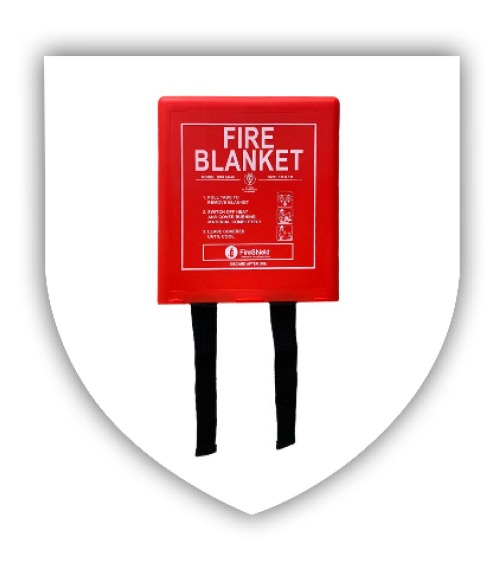
Fire blankets
A fire blanket is used to smother and extinguish small fires. By covering a small fire with your fire blanket, you can stop oxygen from feeding the fire – fires need heat, fuel and oxygen in order to burn and grow. Cutting off the oxygen supply with a fire blanket can be an easy way to stop a small fire from spreading. Fire blankets are typically used in food preparation areas and are most suitable for cooking fat and oil fires (class F), flammable liquids fires (class B) and fire fuelled by solid materials such as plastic, wood, paper, textiles and furniture (class A). For electrical fires and combustible metal fires (class D) do not use a fire blanket: instead, use a CO2 or dry powder extinguisher respectively.
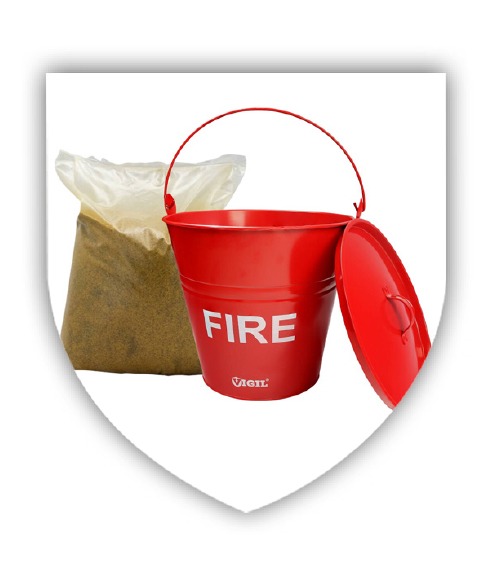
Fire buckets
Fire buckets are an effective way to extinguish small, contained fires and contain spills of flammable liquids in the UK. They are typically filled with sand or water and are easy to use. They are a valuable tool for fire safety due to their simplicity (easy to refill), effectiveness, and affordability.
Fire Extinguisher Regulations
Fire extinguisher legislation in the UK can feel a little complicated for some people. That’s why we wrote this simplified guide to the UK’s current laws and available guidance on fire extinguishers.
As with all fire safety legislation in England and Wales, UK Fire Extinguisher regulations form part of ‘The Regulatory Reform (Fire Safety) Order 2005’, also known as the ‘RRO’.
All premises used for non-domestic purposes, with a few minor exceptions, come under this order.
You can read the The Regulatory Reform (Fire Safety) Order 2005 here
Whilst the legislation has been responsible for dramatically reducing commercial fires in the UK, it can be difficult to interpret if you’re not a fire safety professional – which is why we have answered some of the most frequently asked questions below as clearly and simply as possible.
Relevant British Standards
BS EN 3: The core standard for construction, testing, and approval of portable fire extinguishers. Ensures high quality and reliable fire fighting capability.
BS 5306-3:2017: Covers the commissioning and maintenance of portable fire extinguishers to ensure they remain safe and operational.
BS 5306-8:2023: Provides guidance on the selection and installation of portable fire extinguishers, including travel distance requirements.
BS 6165: Specifies requirements for small, disposable aerosol-type fire extinguishers
Extinguisher commissioning and servicing
Under the Regulatory Reform (Fire Safety) Order 2005 (RRO), all new fire extinguishers require a ‘Commissioning to Service’ as documented in BS 5306-3: 2017. This should be done by a qualified BAFE engineer.
Servicing should be carried out annually by a qualified BAFE registered engineer. Engineers will examine the overall condition of the extinguishers if the labelling is the pressure and weight, expiry dates and the pin and seal are adequate. A report will then be issued once the service has taken place to determine if they need replacement or not.
Our Fire Extinguisher Services
■ Fire Extinguisher Sales
■ Fire Extinguisher Servicing
■ Fire Extinguisher Refills
■ Fire Extinguisher Hire
■ Fire Extinguisher Accessories
■ Fire Safety Equipment
■ 24 Hour Call Outs
BAFE Registered
BAFE SP101 Service/Maintenance of Portable Fire Extinguishers: Third-party certificated by BSI.
BAFE Fire Safety Register – The trusted independent register of quality fire safety organisations for the UK since 1984
Protecting People and Property Since 1985
* The British Standards Institution has published BS ISO 3941:2026 – Classification of Fires. This introduces Class L for lithium-ion battery fires. However, this class has not yet been incorporated in the BS EN 2 / EN 3 extinguisher fire rating system. (April 2026)
;)
;)