Fire Detection and Alarm System Categories Explained – 16 July 2021

Fire Detection and Alarm System Categories Explained (non-domestic premises)

There are eight categories of Fire Detection and Alarm Systems as defined in the British Standard 5839 Part 1 Fire detection and fire alarm systems for buildings. Code of practice for design, installation, commissioning, and maintenance of systems in non-domestic premises. Each category falls under three different type of system.

M – Manual system, no automatic fire detectors so the building is fitted with call points and sounders

L – Automatic Systems intended for the protection of life.

P – Automatic Systems intended for the protection of property.

A fire risk assessment should be carried out to establish which alarm type and category is required for your premises.

Category M – Manual fire alarm system

Category L1 – Maximum life protection automated fire detection and alarm system

Category L2 – Additional life protection automated fire detection and alarm system

Category L3 – Standard life protection automated fire detection and alarm system

Category L4 – Modest life protection automated fire detection and alarm system

Category L5 – Localised life protection automated fire detection and alarm system

Category P1 – Maximum property protection automated fire detection and alarm system

Category P2 – Minimum property protection automated fire detection and alarm system

Category M – Manual fire alarm system


Category M fire alarm systems are common for places of work, such as offices, shops, factories, warehouses and restaurants. Fire alarm systems in this category are manual, where the alarm must be activated by a person using a Manual Call Point. Typical adoption of this category are offices, shops, factories, warehouses and restaurants. A Category M system normally satisfies the requirements of legislation. It is, however, often combined with a Category P system to satisfy the requirements of insurers, as company policy for protection of assets, or to protect against business interruption.
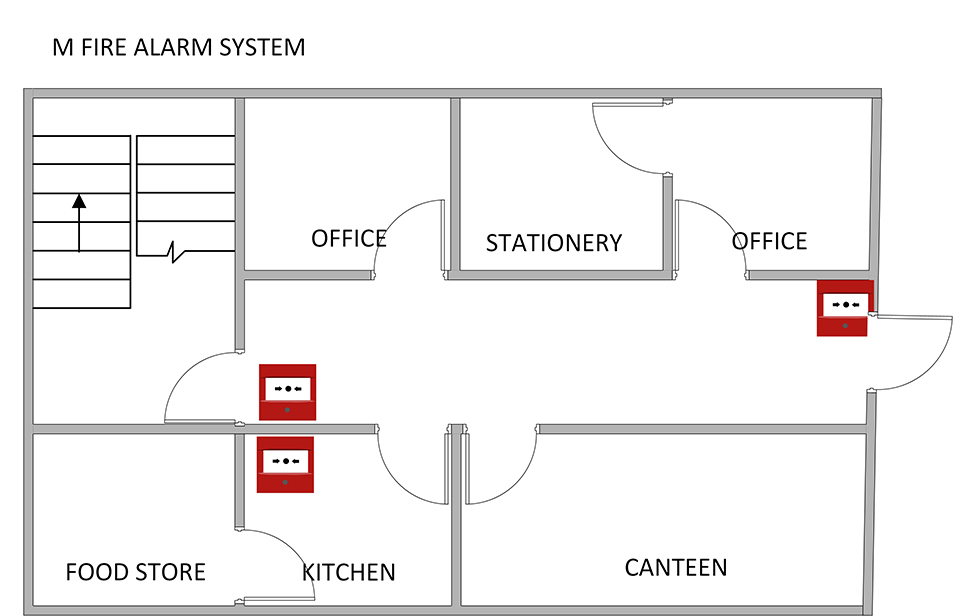
M Category Fire Alarm System

Category L1 – Maximum life protection automated fire detection and alarm system

Category L1 fire detection and alarm systems provide the maximum level of life protection and are often provided in large or complex buildings such as stadiums, hospitals, care homes, shopping centres, large mixed use office blocks as well as sleeping accommodation such as hotels, hostels, student accommodation, houses under multiple occupation. Automatic fire detection is installed in all rooms and areas of the building including roof spaces and voids.
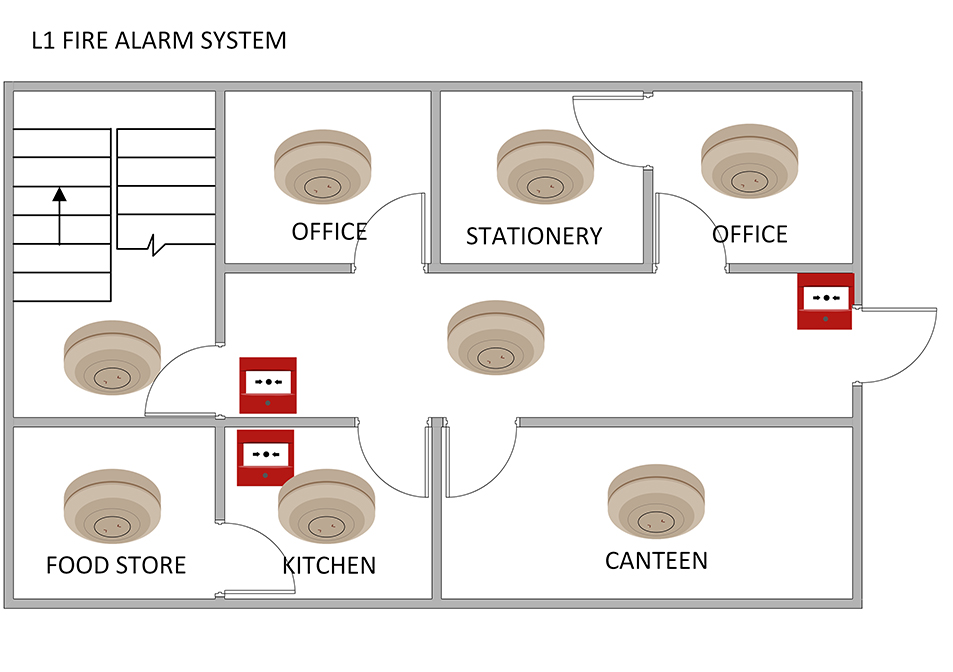
L1 Category Fire Alarm System

Category L2 – Additional life protection automated fire detection and alarm system

Category L2 fire detection and alarm systems are designed to give an early warning of fire to occupants beyond the room in which the fire originates and provide early detection in areas of high risk. Example areas of high risk include boiler rooms, plant rooms, computer/server rooms and other areas with heavy plant machinery. Typical adoption of this category are factories and medium sized sleeping accommodation residential properties.
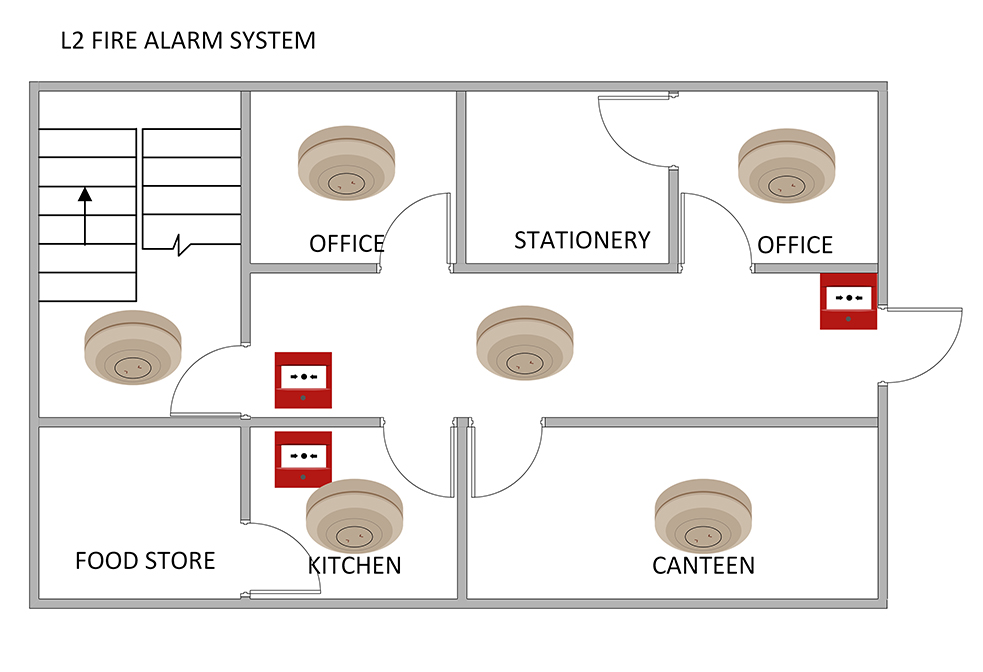
L2 Category Fire Alarm System

Category L3 – Standard life protection automated fire detection and alarm system

Category L3 fire detection and alarm systems provide warning to occupants beyond the room in which the fire originates, enabling occupants to use the escape routes such as corridors and staircases before they become filled with smoke. Automatic fire detection should be installed on all escape routes and in all rooms that open onto an escape route. Typical adoption of this category are medium sized office blocks and commercial buildings with stairs.
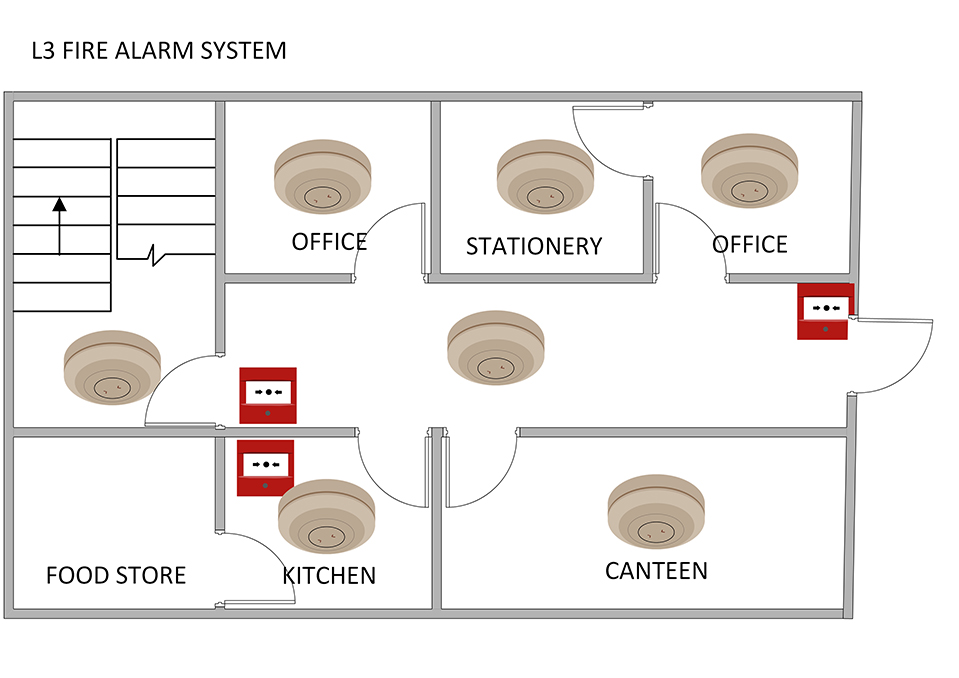
L3 Category Fire Alarm System

Category L4 – Modest life protection automated fire detection and alarm system

Category L4 fire detection and alarm systems provide automatic fire detection within escape routes comprising circulation areas and spaces, such as corridors and stairways. An L4 system would not satisfy the requirements of legislation in buildings in which people sleep. Typical adoption of this category are commercial premises.
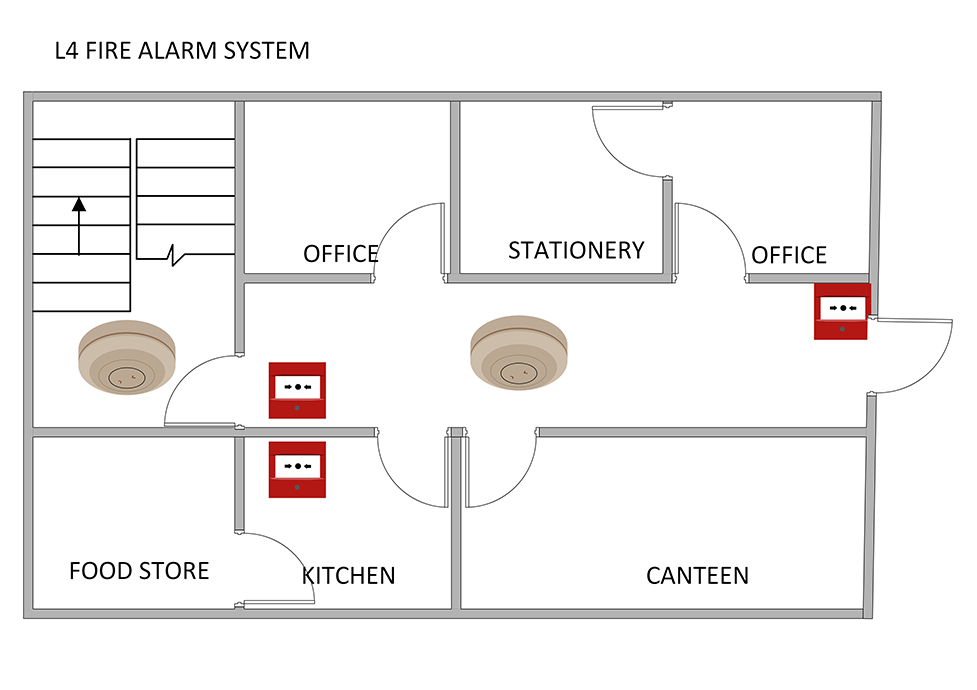
L4 Category Fire Alarm System

Category L5 – Localised life protection automated fire detection and alarm system

A category L5 fire detection and alarm system is designed specifically from the recommendations of a fire risk assessment. This custom category needs to be specified by a qualified fire engineer usually include automatic fire detection which is installed to meet the occupiers use of the premises.
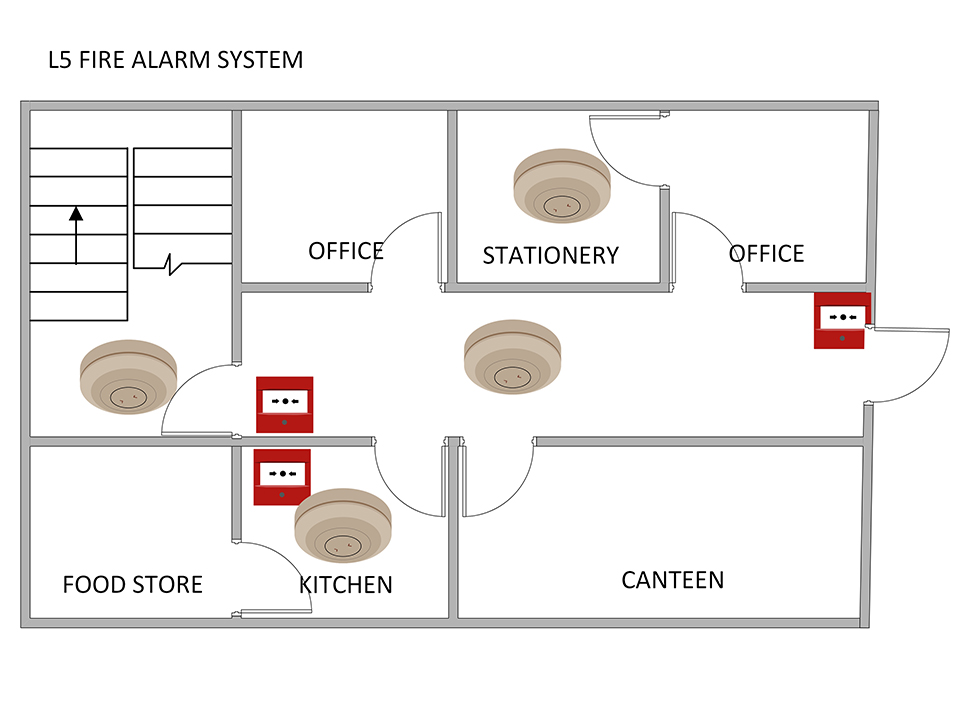
L5 Category Fire Alarm System

Category P1 – Maximum property protection automated fire detection and alarm system

A category P1 fire detection and alarm system protects buildings that are critical to the operation of a business. Maximum protection is provided to the whole site such as having automatic fire detection in all areas of the building, enabling the prompt detection and neutralisation of a potential fire as quickly as possible.
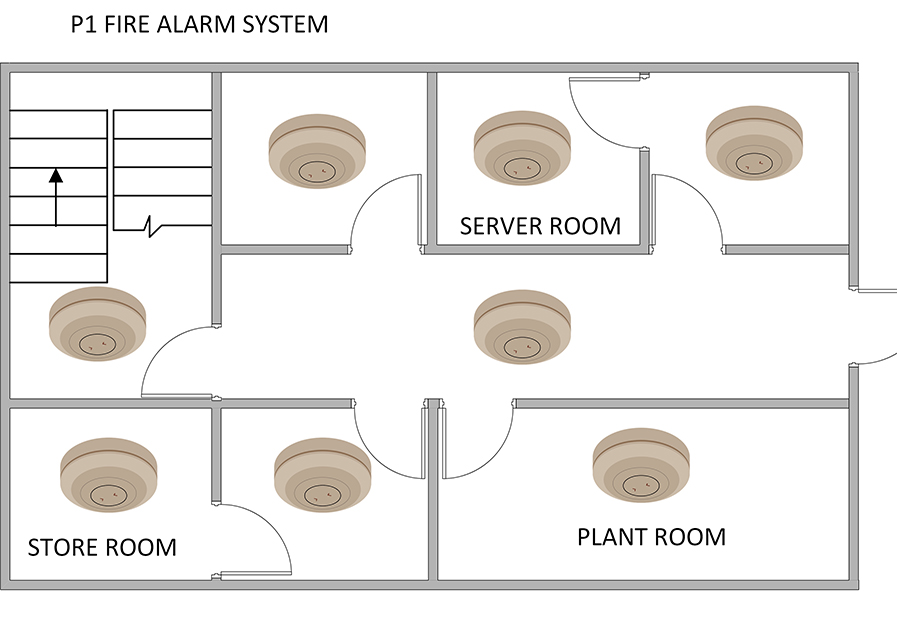
P1 Category Fire Alarm System

Category P2 – Minimum property protection automated fire detection and alarm system

A category P2 fire detection and alarm system protects high risk areas of a building and provides early detection from the most likely sources of a fire and helps to minimize the damage to a property and business.
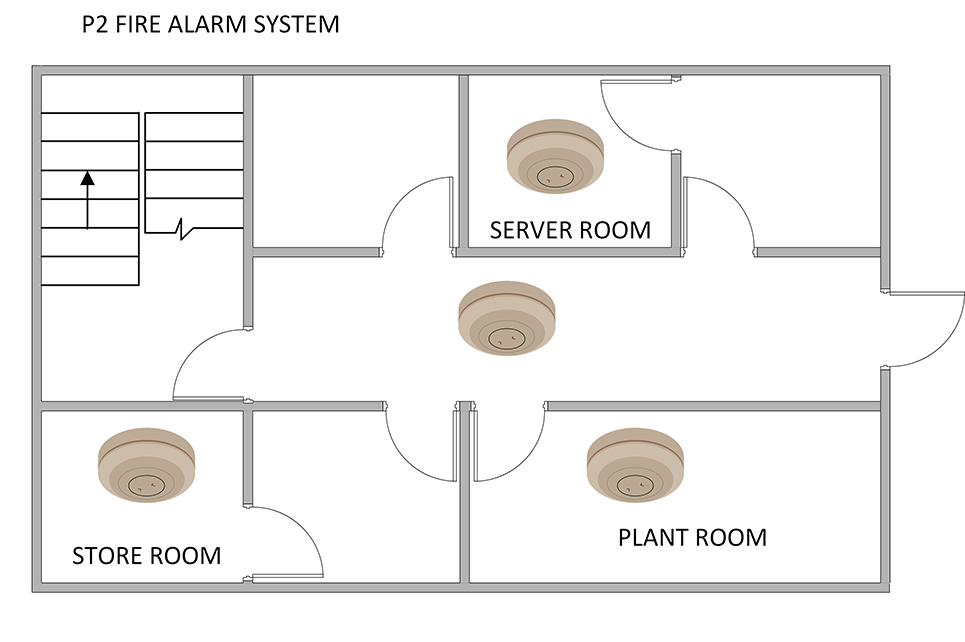
P2 Category Fire Alarm System

RES are accredited to British Standard Institute BSI EN ISO 9000, are a BSI Kitemark Licenced Fire Alarm Installer, and have BAFE Accreditation for Fire Detection and Alarm System Modular Scheme SP203 – Part 1. RES are also members of The British Fire Consortium, Fire Industry Association, The Fire Protection Association.
Types of Fire Detection and Alarm Systems – July 2021

Types of Fire Detection and Alarm Systems

There are generally four main types of Fire Detection and Alarm Systems commonly found in commercial properties

  • Conventional
  • Addressable
  • Wireless
  • Aspirating

Fire detection and alarm systems are a legal requirement under the Regulatory Reform (Fire Safety) Order for non-domestic premises such as Offices, Shops, Hotels, Public Venues.

Conventional Fire Alarm Systems

Conventional fire detection and alarm systems can be found in smaller premises such as shops and restaurants and are comprised of dividing a building into a number of detection zones in a circuit that are linked to a control panel. If a detector is activated, the control panel will identify the circuit where the detector is located and therefore the zone from which the fire alarm has come. These systems tend to be less expensive to install than other types of fire detection and alarm systems.

Analogue Addressable Fire Detection and Alarm Systems

Addressable fire detection and alarm systems can be found in larger, more complex premises such as offices, schools, hospitals, hotels, manufacturing facilities. These systems are able to locate a specific detector in the event of an alarm which enables the emergency services to tackle the exact position of the potential fire. An addressable system reduces the risk of false alarms and can also be extended more easily.

Wireless Fire Detection and Alarm Systems

Wireless fire detection and alarm systems are suited to premises where it is impractical to run cables throughout a property such as listed buildings. Detectors and call points are connected using radio connectivity. These systems are typically more expensive to buy but are less expensive to install and upgrade than conventional and addressable systems.

Aspirating Smoke Detection and Alarm Systems

Aspirating Smoke Detection and Alarm Systems can typically be found in warehouses and unmanned data rooms. These systems use a fan to draw air from around a building using a network of sampling zones. Precision detectors constantly analyse the air and give warning when it detects smoke particles. These systems are typically more expensive to install due to the network of pipes and air filtration detection required.

RES provides a complete fire detection and fire alarm system design, installation and commissioning service, ensuring your premises are compliant to British Standards.

New Evacuation Alert Systems – May 2021

New Evacuation Alert Systems.

New evacuation alert systems are coming onto the market that facilitate the safe and orderly evacuation of buildings containing flats.

In the aftermath of the Grenfell tragedy the fire industry responded with the introduction of a new standard BS 8629:2019. The code of practice for the design, installation, commissioning, and maintenance of evacuation alert systems for use by fire and rescue services in buildings containing flats.

Below are details of two new products that have come to our attention.


Advanced.

EvacGo – Evacuation Alert System


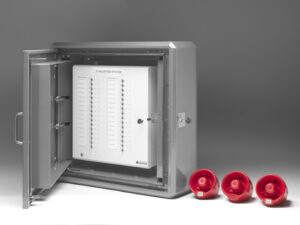
Advanced have brought out the EvacGo – Evacuation Alert System. Advanced have worked closely alongside fire industry experts who wrote the standard to create our BS 8629 solution and are custom manufacturing our EACIE (Evacuation Alert Control & Indicating Equipment) to reflect each individual building’s evacuation zones.


C-TEC.

EVAC Alert


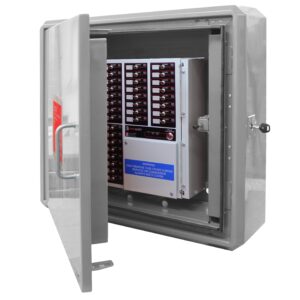
Another solution comes from C-TEC, called the EVAC Alert. This 8629: 2019 compliant evacuation alert system specifically designed to assist the fire and rescue services in evacuating high-rise residential buildings in fire emergencies.


British-built and comprising a range of evacuation alert panels, single and multi-way flat interface units, self-testing evacuation alert sounders and Equality Act-compliant visual indicators and vibrating pillow pads, EVAC-ALERT facilitates the safe and orderly evacuation of buildings containing flats.


Check out the product video here …


FIA GUIDANCE.

FIA - Fire Industry Association

Read the full FIA Guidance on BS 8629:2019

https://www.fia.uk.com/news/guidance-notefia-guidance-document-bs-8629-2019.html


The installation of Evacuation Alert Systems is covered by the BAFE SP207 Design, Installation, Commissioning and Maintenance of Evacuation Alert Systems Scheme.

RES will bring you further updates on this later in the year.

Fire Alarm System

Choosing a fire alarm system

Fire alarm systems are essential to all businesses and corporate/commercial use buildings in case of a fire. Fire alarm systems save lives by alerting occupants within a building of the present danger so that they can evacuate a building quickly and safely in the event of a fire.
The type of fire alarm system installed in a building depends on the structure of the building, the purpose of the building and how these two criteria relate to current fire safety legislation. All non-domestic premises including common parts of houses in multiple occupations (HMOs), those premises used by the self-employed (including family-run businesses) and the voluntary sector must comply with The Regulatory Reform (Fire Safety) Order 2005.

Mains Powered Systems

BS 5839-6:2019 Fire detection and fire alarm systems for buildings. Code of practice for the design, installation, commissioning and maintenance of fire detection and fire alarm systems in domestic premises.

Types of fire alarm system
Fire alarm systems all generally work in the same way. If a fire or smoke detector detects fire or smoke, or if someone breaks the glass on an alarm system wall unit (known as a manual call point), an alarm will sound to warn people in the building that they need to evacuate due to the risk of fire. It is also possible to have a fire alarm system that sends a signal to a local fire brigade so they are sent out to the building as soon as the alarm is raised. There are four main kinds of fire alarm system, these are:
⁃ Conventional
⁃ Analogue addressable
⁃ Addressable
⁃ Wireless

Conventional fire alarm systems
With a conventional fire alarm system, there are a number of detectors that form a network that is wired to a main control panel in zones. A ‘zone’ is a circuit, and normally there is one ‘zone’ or ‘circuit’ per floor in a building. A conventional alarm system enables you to determine which zone the alarm was first raised in. This makes it easier to determine where the fire originally started and is essential information for firefighters. There is typically an end of line device on all circuits for monitoring. There must always be a zone plan clearly displayed next to the fire alarm control and indicator panel for reference purposes.

Analogue addressable fire alarm systems

With an analogue addressable fire alarm system, you can receive details about individual detectors so that you have a higher level of detail in comparison to details of a ‘zone’ where the fire started. This type of alarm system is most common in large commercial buildings to give better identification of a fire’s source. As a result, they can be more expensive. The fire control panel receives details from each detector device regarding whether there is smoke, heat or a fire present.

Addressable fire alarm systems
Addressable fire alarm systems are similar to conventional systems, except that the control panel is able to find exactly where the alarm was first raised. The alarm system is wired as a large loop, with multiple devices connected. This enables a person to quickly determine an alarm’s location. The positives of an addressable fire alarm system include better handling of false alarms, better reliability, lower wiring costs, and a large loop that is less likely to lose connection.

Fire alarm system design
If you hire a fire alarm system designer, they will need to determine the following information:
⁃ The type of system that is required
⁃ The parts of the premises that need a fire alarm system
⁃ How occupants will be affected
⁃ How the fire brigade will be contacted (i.e. should the device need to do this for you)
⁃ How many manual call points you will require
⁃ Fire safety procedures currently in place
⁃ Any other ongoing work that is currently taking place in the building (contractors may have to be consulted)

Wireless fire alarm systems
Although a wireless fire alarm system is more expensive, for some types of building (such as a listed building), where wiring for a fire alarm system is not do-able or permitted, a wireless system makes a great solution. With a wireless system there are no cables present between the control panel and detection devices, so there is no need for cable testing. All wireless systems must comply with EN54-25 standards, and must have multi-frequency links to ensure that signal strength is high at all times.
RES is an approved Hyfire wireless alarm installer – a brand that is synonymous with advanced and innovative wireless fire alarm solutions. The Hyfire system integrates both wired and wireless devices with industry-standard control equipment.

Fire alarm systems from RES
RES provides comprehensive fire detection and alarm system design solutions, as well as installation and testing/maintenance services to ensure that your building complies with British Standards BS5839 Pt1.

Depending on our inspection of your premises, we may recommend the following products to you that we can install:
⁃ Manual call units (also known as ‘break glass’ units
⁃ Point detectors (to detect smoke, fire, heat, radiation or carbon monoxide)
⁃ Multi-sensor detectors (to reject false alarms by working with currently installed detectors)
⁃ Optical beam detectors (for larger spaces)
⁃ Line type heat detectors (detectors for averse conditions or large industrial spaces such as car parks)
⁃ Aspirating fire detectors (fire detectors that analyse the air and send this air to a central detection unit through pipes)
⁃ Wireless fire alarm systems
⁃ Visual alarms and beacons (in case there is a risk of audio fire alarms not being heard in the cases of disability or building occupants wearing ear defenders)

RES covers the South of England including London, Berkshire, Bracknell, Windsor, Middlesex & Surrey, Oxfordshire, Hampshire, Buckinghamshire, Hertfordshire, Essex & Kent, West & East Sussex, Reading, Maidenhead, Slough, Newbury and the surrounding areas.

RES has highly experienced fire risk assessment officers, alongside well-trained fire alarm system designers, technicians and engineers. We provide cost-effective yet high quality, industry-standard fire alarm systems for our clients to keep their buildings and occupants safe.

January 2019 – RES join Fire Protection Association

RES are now members of the The Fire Protection Association (FPA) which is the UK’s national fire safety organisation.

This further demonstrates our commitment  to working towards protecting people, property, business and the environment.

Since the FPA’s formation in 1946 they have attained an unrivalled reputation for quality of work and expertise in all aspects of fire including research, consultancy, training, membership, publications, risk surveying and auditing. The FPA’s products and services are designed to assist fire, security and safety professionals achieve and maintain the very highest standards of fire safety management.