
UK FIRE SAFETY GUIDE 2026
Premises fire safety can be complicated to navigate at the best of times, so the aim of this guide is to simply raise awareness for Responsible Persons of the key changes that may affect their premises and where further information can be found.
UK fire safety guidance in 2026 features major updates to Approved Document B (effective September 30, 2026), mandating second staircases in new residential buildings over 18m, stricter cladding standards, and enhanced sprinkler requirements. New PEEP regulations for high-rise residential buildings take effect April 6, 2026, alongside revised / new British Standards for fire detection and alarm systems, emergency lighting and fire risk assessments.

Key 2026 Fire Safety Changes & Regulations
■ Approved Document B (Sept 2026): Significant updates come into force, including mandatory second staircases for new residential buildings over 18m and updated evacuation strategies.
■ Residential Evacuation (April 2026): New regulations for high-risk residential buildings (typically over 18m or 7+ storeys) require Personal Emergency Evacuation Plans (PEEPs) for residents needing assistance and mandatory evacuation strategies.
■ Cladding & Materials (Jan 2026): Revised European cladding fire safety standards come into effect, introducing new, stricter temperature-based assessments and classification rules.
■ Sprinklers & Standards: Updates mandate sprinklers in all new care homes. National Class fire testing (BS 476) is phased out in favor of European standards (BS EN 13501).
■ Fire Risk Assessments: A new code of practice, BS 9792, is introduced to replace PAS 79, providing more robust requirements for fire risk assessments in blocks of flats and HMOs.
■ Healthcare: Updated fire safety guidance (HTM 05-01) for the healthcare sector, including acute and mental health trusts, takes effect, emphasizing risk-proportionate management.
Action Required for Dutyholders
■ Review Designs: Construction projects must align with the new 2026 Approved Document B requirements regarding staircases and material standards.
■ Prepare PEEPs: Responsible persons must prepare for the April 2026 deadline by identifying vulnerable residents in high-rise buildings.
■ Update Assessments: Fire risk assessments must be updated to comply with new, stricter standards, including documentation of digital logbooks for systems.

Reference information
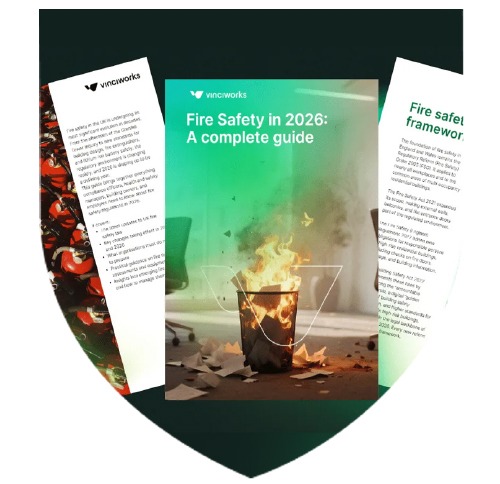
Fire Safety in 2026: A complete guide, is the latest guide for actionable insights on creating a safer workplace by VinciWorks.
In this guide, you’ll discover:
■ The latest updates to UK fire safety law and key changes: 2025 into 2026
■ How to identify and mitigate the most common fire-risks across industrial, office and hybrid environments
■ A clear roadmap to compliance with fire-safety obligations under UK legislation
■ Practical steps for embedding fire safety into company culture, from risk assessment to drills
■ How to review and strengthen your current plan so you’re not simply reacting when the worst happens
Download now and take the first step towards a fire-resilient organisation.
GOV.UK is a key resource for premises fire safety, providing guidance for those with legal duties.
Fire safety law
The Regulatory Reform (Fire Safety) Order 2005 (FSO) is the main piece of legislation governing fire safety in buildings in England and Wales.
The FSO applies to all workplaces and the common parts of buildings containing 2 or more domestic premises. It places legal duties on anyone in control of these premises (the Responsible Person – usually the owner or landlord) to undertake and record a fire risk assessment and put in place and maintain general fire precautions.
The Fire Safety Act 2021 clarified that the external walls, flat entrance doors and structure of buildings are all covered by the FSO and must be accounted for in fire risk assessments.
The Fire Safety (England) Regulations Fire Safety (England) Regulations 2022 and section 156 of the Building Safety Act Check your fire safety responsibilities under section 156 of the Building Safety Act 2022 brought in additional duties for Responsible Persons under the Fire Safety Order.
Find out if you’re a Responsible Person under the Fire Safety Order and what responsibilities you may have: People with duties under fire safety laws.
Guidance
If you have identified that you are a Responsible Person or someone with duties under fire safety legislation the following guides will help you to:
■ understand what you need to do to comply with fire safety law
■ carry out and review a fire risk assessment
■ identify the general fire precautions you need to put in place and maintain
As well as the guidance listed below, which is published under Article 50 of the FSO to assist responsible persons in complying with their duties under The Regulatory Reform (Fire Safety) Order 2005 (FSO) , complimentary fire safety advice is also available:
■ guidance on fire safety provisions for certain types of existing housing produced by the Local Authorities Coordinators of Regulatory Services (LACORS)
■ fire safety in construction produced by the Health and Safety Executive
■ National Fire Chiefs Council: NFCC Protection-Guidance. The National Fire Chiefs Council produce a range of guidance, including guidance on fire safety in specialised housing, and guidance on finding a competent fire risk assessor.
These non-statutory guides offer recommendations for best practice on fire safety which may go beyond the scope of the FSO. You may therefore find it helpful to consider them in conjunction with the relevant statutory guidance that can be found in the links below.
https://www.gov.uk/government/collections/fire-safety-legislation-guidance-for-those-with-legal-duties
https://www.gov.uk/workplace-fire-safety-your-responsibilities/fire-risk-assessments
;)
;)