
SMOKE CONTROL SYSTEMS GUIDE 2026
This introductory smoke control systems guide covers the main types of systems, the standards and legislation that govern them, and the responsibilities of duty holders for installation, maintenance and compliance.
What is a smoke control system?
A smoke control system is a critical life-safety provision when installed in a UK building.
They are designed to protect the people inside buildings by maintaining escape routes, reducing smoke spread during a fire aiding safe evacuation and ensuring firefighting personnel can access the premises without suffering smoke related injuries or complications.
In many buildings, including blocks of flats and high-rise commercial premises, a smoke control system, integrated with a fire detection and alarm system to operate correctly in a fire scenario, is a legal requirement under the Building Regulations and related standards.
While a buildings height influences design, a smoke control system can be required in any building with enclosed escape routes where smoke would otherwise compromise safe egress.
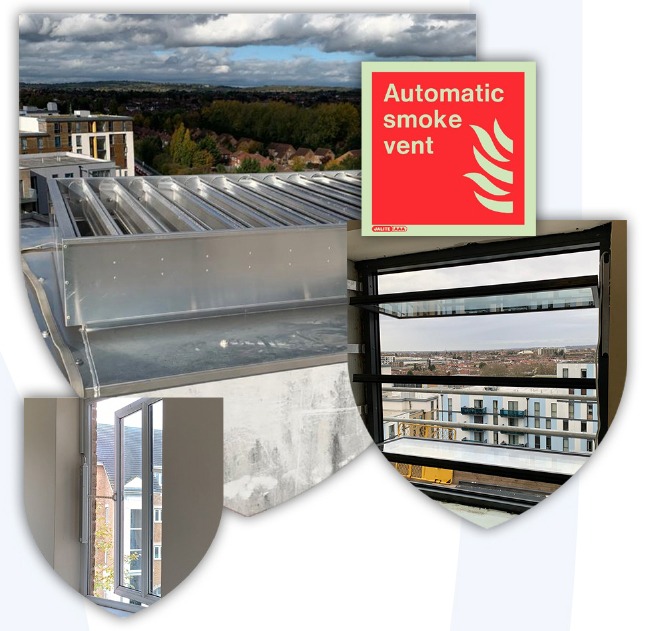
Main types of smoke control and smoke ventilation systems
There two main types of smoke control and smoke ventilation systems, natural and mechanical.
Natural Smoke Ventilation Systems:
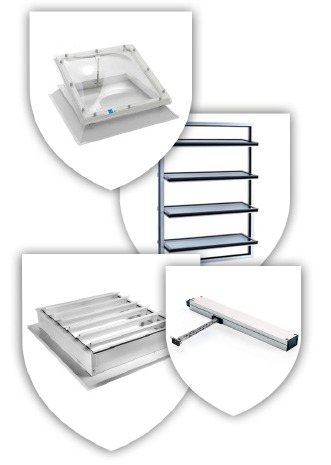
These systems rely on the natural buoyancy of hot smoke rising to exhaust it through strategic openings such as shaft doors, roof vents, windows or AOV louvres.
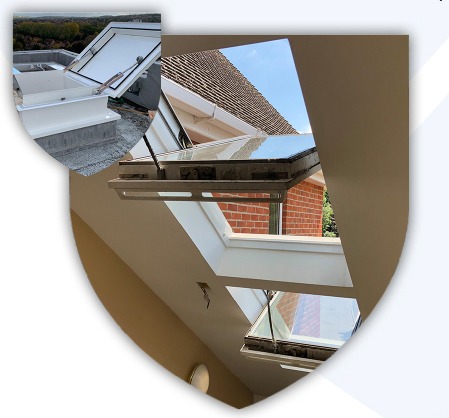
AOVs (Automatic Opening Vent):
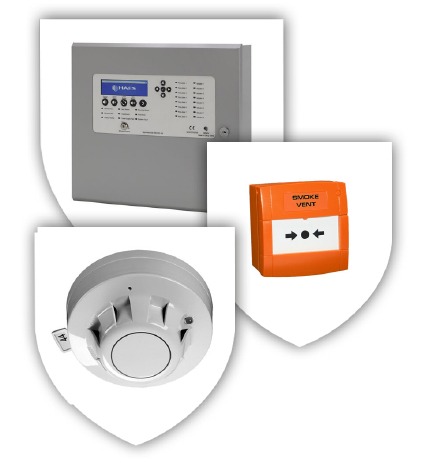
AOV’s are a commonly used type of natural smoke control system allowing smoke to rise and escape via a shaft door, window and or roof vents which are activated to open by either a smoke or heat detector (which is triggered by hot smoke’s innate buoyancy), or a manual smoke vent call point.
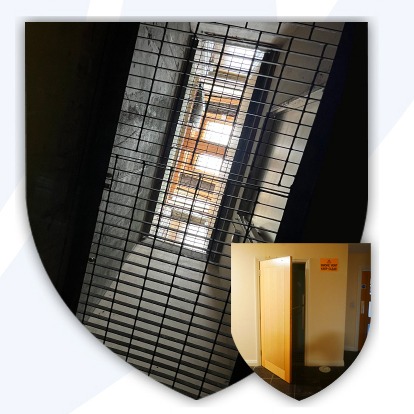
Smoke Shafts:
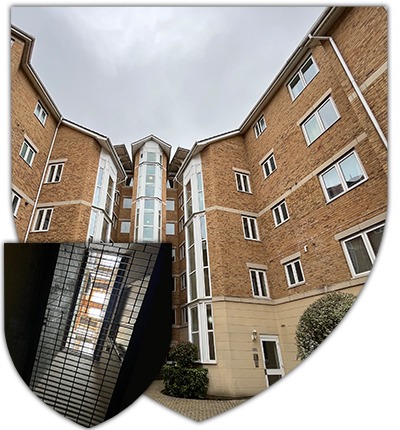
Smoke shafts are vertical ducts designed to serve multiple floors within a building, typically found in blocks of flats. Corridor vents connect to the shaft, allowing smoke to discharge safely to atmosphere at roof level. Smoke shafts are commonly used where extended corridors exceed the limits for simple natural ventilation and are frequently required under Approved Document B.
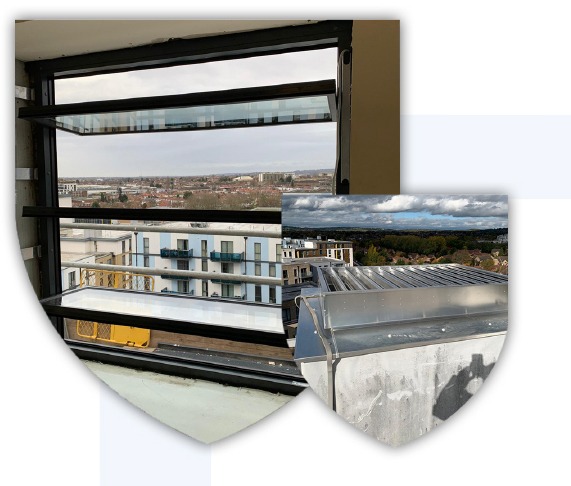
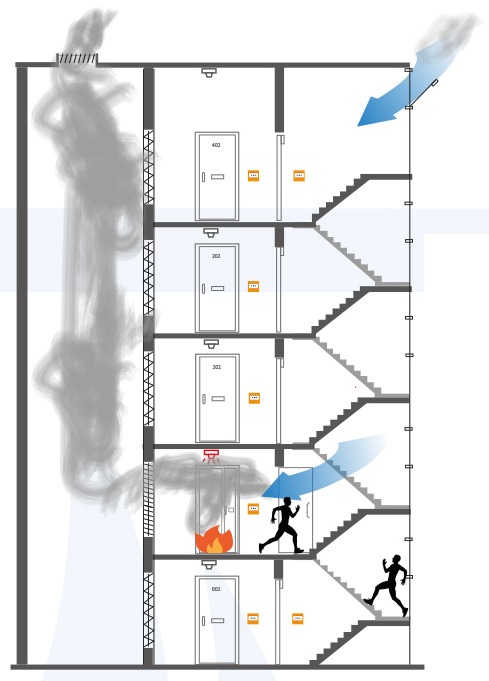
Typical example of natural smoke ventilation shaft and top of stairwell AOV
Mechanical Smoke Ventilation Systems:
These systems are used where natural ventilation is impractical, for example in many high-rise developments, taller, larger buildings and or those with more complex layouts.
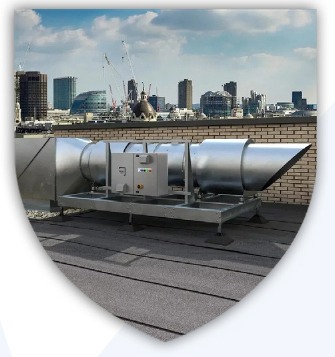
Mechanical ventilation:
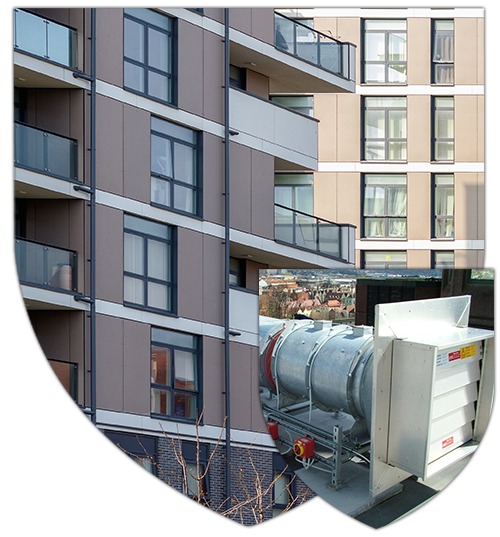
Mechanical ventilation systems use fans and controls to extract smoke from a building
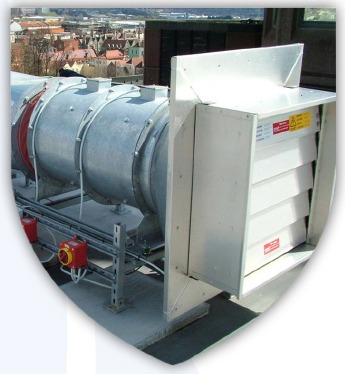
Pressurisation systems:
Pressurisation systems maintain higher air pressure in protected escape routes such as stairwells so that smoke is kept out. This is often a mechanical approach used in taller or larger complex buildings.
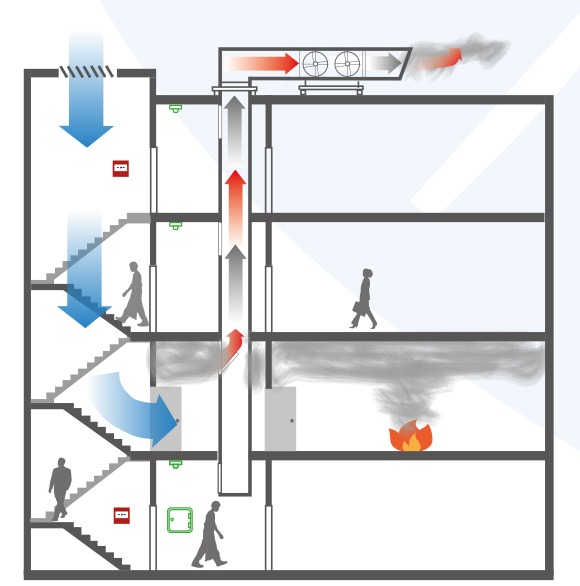
Typical example of mechanical ventilation
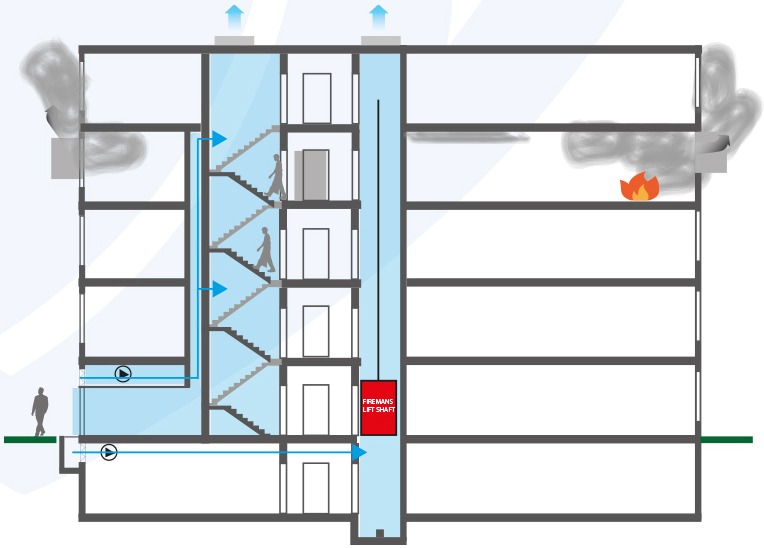
Typical example of a pressurisation system with staircase and firefighters’ lift shaft protection, and air release in the façade(s) (Source: BS EN 1201-13 2022)
UK Smoke Control System requirements
Smoke control systems can form part of an overall fire strategy and must be integrated with the fire alarm and other life-safety systems. While the premises Fire Risk Assessment under the Regulatory Reform (Fire Safety) Order does not automatically mandate smoke control, it often identifies where smoke control is a proportionate life-safety measure, especially in multi-storey residential and high-risk buildings.
Residential Buildings:
Under Approved Document B, residential buildings over approximately 11 m (typically four storeys) normally require smoke control in common escape routes such as stairwells and corridors. This can be achieved with AOVs or equivalent smoke shafts providing the minimum free area required under Approved Document B (often 1.0m² in residential corridors, subject to design).
Guidance (such as BS 9991:2024) also influences how and where smoke control systems should be designed and can set specific performance criteria for tall residential blocks.
In many purpose-built blocks of flats designed around a stay-put strategy, smoke control systems are essential to maintaining tenable conditions in common corridors while individual flats remain compartmented.
In single-stair residential buildings, smoke control to corridors and stairwell cores is particularly critical, as the protected stairwell may be the sole means of escape for occupants above ground level.
High-Rise and Complex Buildings:
Buildings above certain height thresholds (e.g. over 30 m) generally need more engineered smoke control solutions, including mechanical smoke ventilation or pressurisation systems, especially when natural smoke ventilation alone cannot achieve the required performance.
Smoke Control Standards and Guidance in the UK
Smoke control systems must be designed by competent professionals, coordinated with fire strategy and fire detection systems, and installed in accordance with Approved Document B and relevant British Standards. Components must be certified and selected based on documented performance criteria.
Approved Document B – Building Regulations
Approved Document B sets out the performance requirements for fire safety in
buildings, including smoke control to protected escape routes. It guides where and
how smoke control measures should be applied in residential and other buildings.
BS EN 12101 Series
BS EN 12101 is a suite of standards (adopted in the UK) that governs the performance, testing
and certification of smoke control system components such as vents, fans, dampers and control panels. Compliance with these standards (and UKCA marking) is expected for any life-safety smoke control product.
BS 9991:2024 Fire safety in the design, use and management of residential buildings. Code of practice
BS 9991 provides best-practice guidance for smoke control and evacuation in residential buildings, and recent editions include updated provisions on when natural and mechanical smoke ventilation systems are required based on building height and travel distances.
BS 9999:2017 Fire safety in the design, use and management of buildings. Code of practice
BS 9999 supplements ADB and BS 9991 for non-residential, complex or bespoke buildings, offering additional guidance on smoke control design, inspection and testing requirements.
BS 7346-8:2013 Components for smoke control systems – Code of Practice for planning, design, installation, commissioning and maintenance
BS 7346-8 outlines the planning, design, installation, commissioning and maintenance of smoke control (including ventilation) systems.
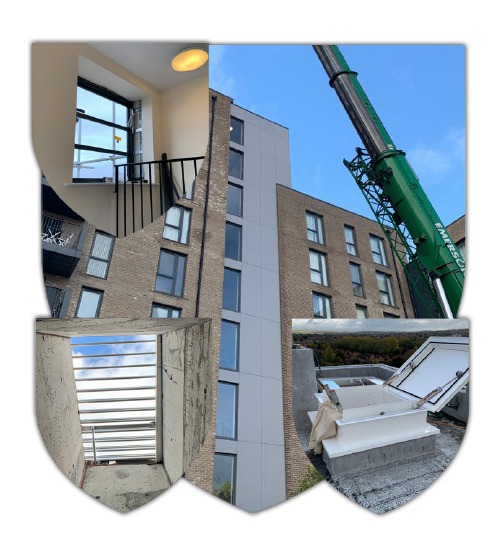
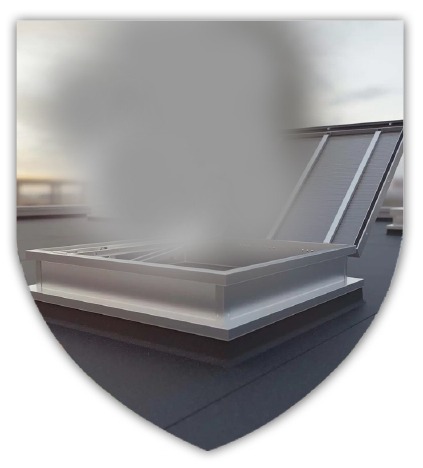
Replacement AOV Case Study
View our project case study where we replaced a rooftop louvre vent, installed louvre windows and serviced AOV domes.
Compliance
Smoke control systems are a vital aspect of fire safety and must be correctly specified, designed, installed, commissioned and maintained by competent professionals to ensure the system delivers when required.
A compliant smoke control and ventilation system can reduce the risk of a fire developing and limit smoke damage to a building and greatly reduces the chances of building occupants choking or being overwhelmed by smoke. It reduces the risk of smoke inhalation around escape routes such as corridors and staircases and makes it easier for emergency services to access a building.
Specification: A correctly specified smoke control system is a core part of a buildings fire strategy design and therefore specification typically rests with a fire safety specialist (competent person), such as fire engineers, fire risk assessors by way of the premises Fire Risk Assessment or Enforcing Authorities.
Design: The design of a smoke control system, depending on the specification, typically rests with specialist system manufacturers and installers depending on the type and complexity of the system required.
Installation: The installation of a smoke control system may take place over several phases of a buildings construction; therefore, all those involved should be competent persons / companies with a specialist system installer overseeing the installation.
Commissioning: New systems should be commissioned and tested to prove correct operation, with all cause and effects clearly documented showing how components operate in response to a fire.
Maintenance: Regular inspection and testing of AOVs, control panels, actuators, fans and associated equipment is essential to ensure smoke control systems are reliable when needed. Refer to the premises fire risk assessment and or a specialist service and maintenance provider as to the frequency of regular inspections.
BS7346:8 Mandates a minimum of two service visits per year by qualified engineers, including special inspections* during the changeover of maintenance providers.
Record keeping: Detailed records of all maintenance regimes, including daily or weekly tests, quarterly visual inspections and six-monthly / annual servicing and maintenance by competent engineers.
*BS7346:8 Components for Smoke Control Systems: Code of Practice for design installation, commissioning and maintenance recommends that special inspections of smoke vent systems are completed when a new contractor takes over maintenance. This will also be required as part of a building safety case for submission to the Building Safety Regulator under the Building Safety Act.
The frequent lack of sufficient documentation available on site can make it difficult to ascertain the original design intent for systems, particularly fire engineered solutions that do not follow the approved guidance. In such cases an assessment must be made using fire engineering to arrive at appropriate performance criteria that can be tested to on site. Unless clear performance requirements are available then any regular testing and maintenance will be inadequate and inconclusive.
Failure to maintain smoke control systems may result in enforcement action by an Enforcing Authority such as the Fire and Rescue Authority.
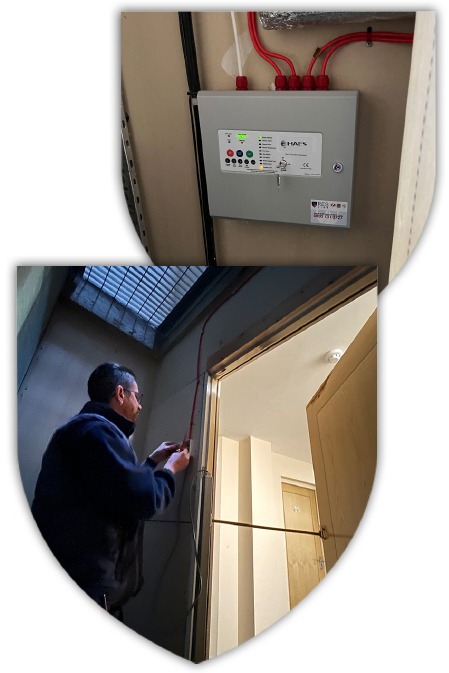
Smoke control and ventilation systems with RES Fire & Security
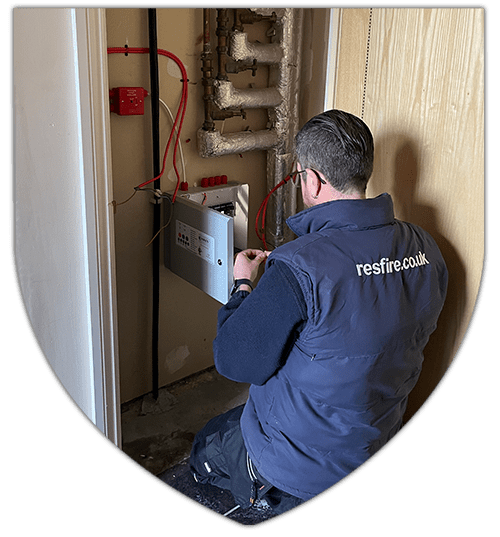
At RES Fire & Security, our experienced service engineers can regularly inspect and test as well as service and maintain smoke control and ventilation systems six-monthly / annually to the requirements of both the system and premises. For premises with fire detection and alarm systems with complex ventilation systems our engineers work with specialist system manufacturers/maintenance providers.
We can also design, install and commission smoke control and ventilation systems based on the specification provided for your premises, working with specialist system manufacturers to ensure installations comply with current legislation and UK Building Regulations. Our experienced and highly trained installers ensure that your smoke control and ventilation system is installed correctly, thoroughly tested and handed over on time.
RES Fire & Security offer smoke control and ventilation systems services covering the South of England including London, Berkshire, Bracknell, Windsor, Middlesex & Surrey, Oxfordshire, Hampshire, Buckinghamshire, Hertfordshire, Essex & Kent, West & East Sussex, Reading, Maidenhead, Slough, Newbury and the surrounding areas.
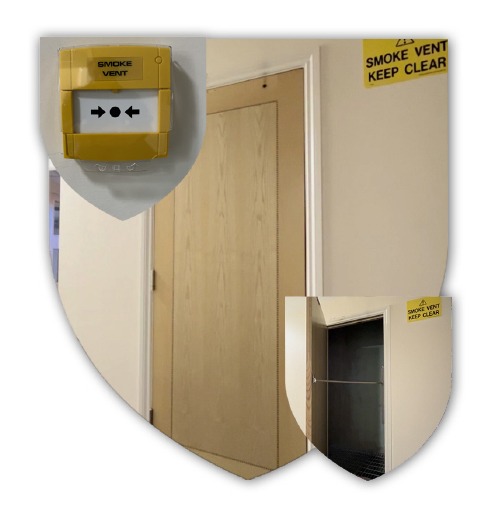
Case Study: Smoke control and ventilation routine service and repair
View our project case study where we carried out a routine service on the aov system and subsequently carried out a repair.

Our Smoke Control & Ventilation System Services
■ Servicing and maintenance
■ Regular checks, tests
■ Repair and/or upgrading of existing systems
■ Design and installation
Protecting People and Property Since 1985
;)
;)