
Fire Door Inspection & Maintenance Guide 2026
Importance of having compliant fire doors
Compliant and well maintained fire doors will:
■ Hinder the spread of fire throughout a building
■ Hinder the spread of fire, smoke, heat onto escape routes
■ Protect storage areas e.g. Data or combustible materials
■ Provide a minimum of 30 minutes resistance to fire, smoke and heat to compartmentalised safe area
Remember to check for certification
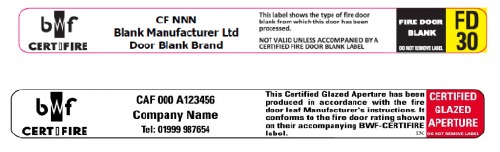
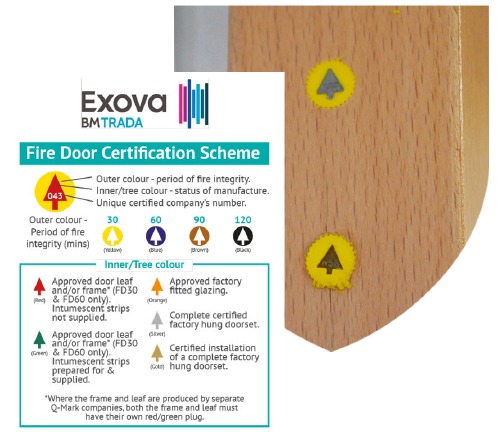
Is there a label or plug on top (or occasionally on the side) of the door to show it is a certificated fire door? You can use the camera your smart phone or a mirror to check. If there is, that’s good news, otherwise report it to whoever is in charge of your building.
* The British Standards Institution has published BS ISO 3941:2026 – Classification of Fires. This introduces Class L for lithium-ion battery fires. However, this class has not yet been incorporated in the BS EN 2 / EN 3 extinguisher fire rating system. (April 2026)
Five Common Door Faults
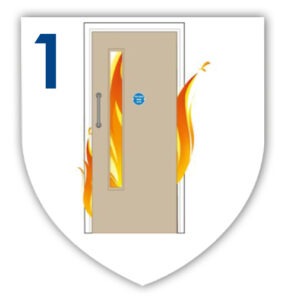
Over 61% had fire or smoke seals either missing, installed incorrectly or not filling perimeter gaps correctly.
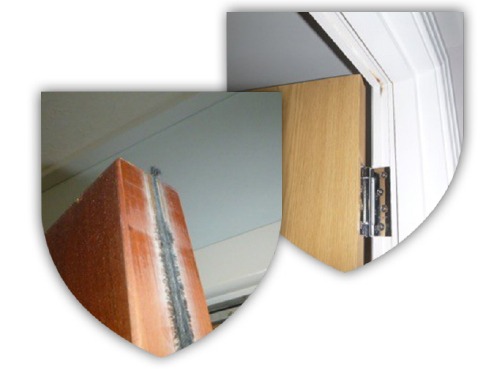
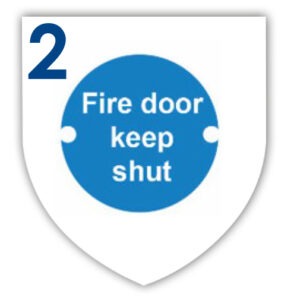
Over a third had incorrect or missing mandatory signage.
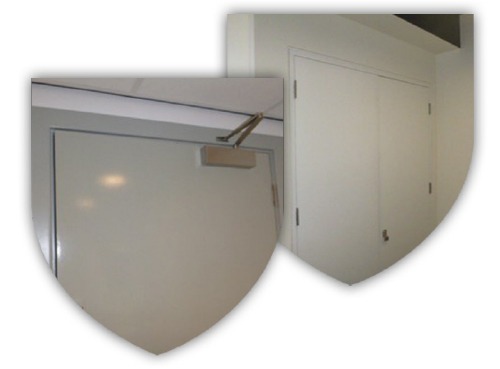
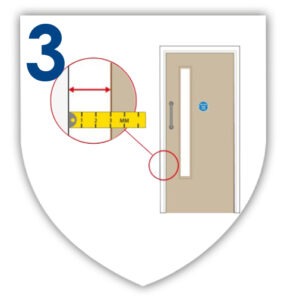
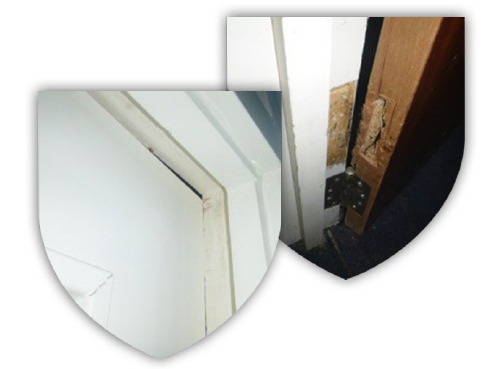
More than 230 (34%) fire doors inspected had excessive gaps between the door and its frame (i.e. over 3mm)
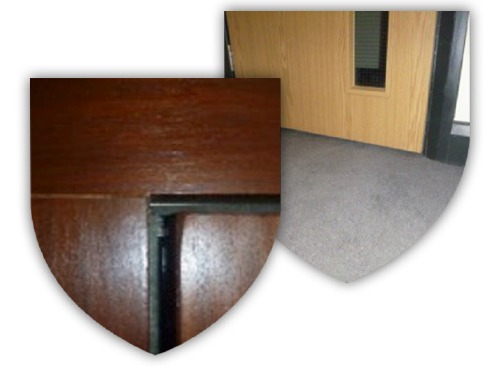

Almost one in five had unsuitable hinges.
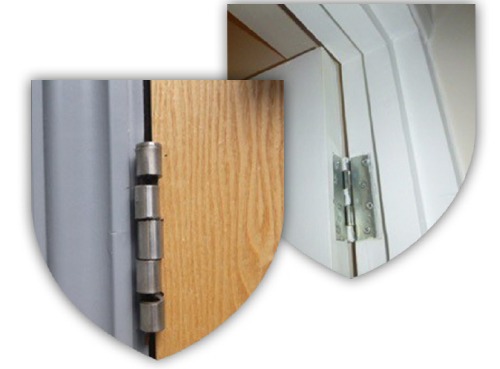
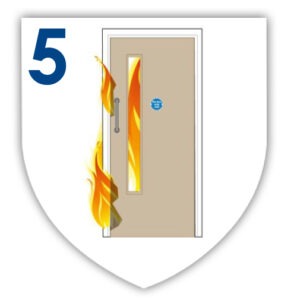
Over 15% had damage to the door leaf
Checking Fire Doors

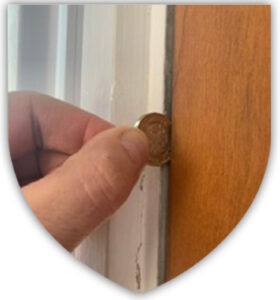
Check the gaps around the top and sides of the door are consistently less than 4mm when closed.
– Use a £1 coin to give a feel for scale, this is about 3mm thick.
– The gap under the door can be slightly larger (up to 8mm is not uncommon), but it does depend on the door – as a rule of thumb, if you can see light under the door, the gap is likely to be too big.
– If the gaps between the door and its frame are too big smoke and fire could travel through the cracks.
– A doors threshold gap should be no more than 10mm, allowing the door to swing unhindered.
– It’s good news if the door fits the frame and both the frame and door are not damaged. While checking for damage and making sure the frame is fitted securely, look out for the doors certification label or plug. This will confirm if the door is fire resistant to 30 or 60 minutes.

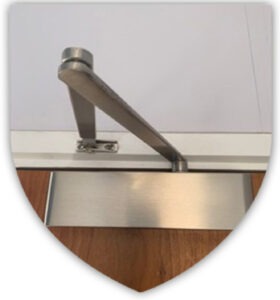
Check that the fire door has a working door closure system and closes correctly as designed.
– Fire doors should be kept closed at all times, or if kept open, should use an automatic release unit when the fire alarm is activated.
– Open the door about halfway, let go and allow it to close by itself.
– Does it close firmly onto the latch without sticking on the floor or the frame?
– A fire door only works when it’s closed. A fire door is completely useless if it’s wedged open or can’t close fully.
– Fire doors that are ‘Kept locked shut’ do not require door closers providing the door is actually kept locked shut!

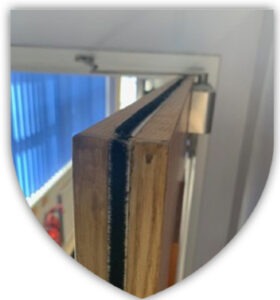
Check that intumescent seals or intumescent cold smoke seals are fitted into a groove in the frame or door.
– Are there intumescent seals or intumescent cold smoke seals around the door or frame?
– If fitted, are they intact with no sign of damage? (Intumescence is a sealing substance that expands in a fire, filling the gap between the door and frame).
– Seals are vital to the fire door’s performance, preventing smoke from passing through the gaps between the door and frame then expanding if in contact with heat, stopping the fire from spreading to other compartments and escape routes.
– Fire doors in older premises may not be fitted with seals but will have one inch door stops.
– See UPGRADING OF FIRE DOORS.

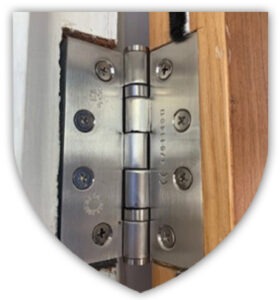
Check that the door has three hinges.
– Hinges must be the correct type, and should have the correct fire rating.
– Three is critical in helping the door stay in position and not break away from the frame in a fire.
– Are the hinges firmly fixed, with no missing or broken screws?
– Are the hinges showing signs of wear?
– Worn hinges will cause the door to drop and gaps between the door and frame to vary eventually causing the door to not close as designed.

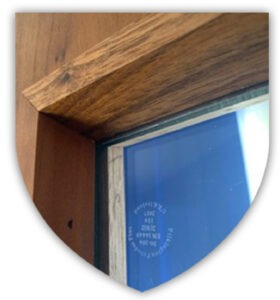
Check vision panels have correctly installed glazing which is appropriately fire rated.
– Fire rated glass vision panels must be installed using intumescent seals. Intumescent helps hold the glass in a fire, maintaining its position under heat.
– Without the use of an intumescent seal the glass will collapse allowing the fire to spread!
– Fire rated glass will have a manufacturers logo complete with product compliance information.
– If in doubt contact the door manufacturer or a third party certified door installer / inspector.

Check that correct door furniture is installed.
– Ensure that the lock and latch holds the door firmly in place. If it does not this should be resolved – as all fire doors must close firmly into the frame.
– Check manufacturers product information when installing new door furniture, the item may require installing with intumescent material so the doors fire resistance is not compromised.
– Only use approved fire rated products when installing new door furniture. CERTIFIRE is an independent third party certification scheme that assures performance, quality, reliability and traceability of fire protection products.
– If in doubt contact the door manufacturer or a third party certified door installer / inspector

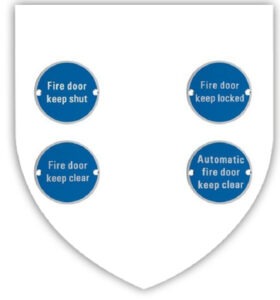
Check that the door has correctly fitted mandatory signage.
– Fire door signage should be positioned at eye level on the door and not on vision panels as this may compromise the fire resistance of the glass.
– Staff, students and visitors can only be expected to use fire doors correctly if instructed.
– Cross corridor or room doors opening on to escape routes require ‘Fire door keep shut’ on both faces of each leaf of self closing doors.
– Automatic doors fitted with a device that releases the door in the event of a fire require ‘Automatic fire door keep clear’ placed on the visible side of the door when held open.
– Fire doors without self closing devices i.e. store rooms, risers and services rooms require ‘Fire door keep locked shut’ fixed to the outer door face.
Common Terminology
| Description | Key |
| A fire door with 30 minutes integrity and 30 minutes insulation (FD30/30) | FD30 |
| A fire door with 60 minutes integrity and 60 minutes insulation (FD60/60) | FD60 |
| Smoke Seals | (S) |
| Self Closing-Closed by automatic device MB. See BS 6459 | SC |
| Vision Panel (If in a Fire Door must be FRG) | VP |
| Fire Resistant Glazing (30/60 minutes resistant) | FRG |
| Push Bar | PB |
Routine fire door inspections and maintenance
BS 9999:2017 Annex I Routine inspection and maintenance of fire safety installations
Daily:
Fire door automatic release mechanisms
All fire doors that are held open by automatic release mechanisms should be released daily.
Monthly:
Automatic opening doors
The operation of fail-safe mechanisms should be tested once a month, either by ”breaking out” the doorset or by simulating failure of the mains power supply, as appropriate. The result of the test should be recorded. Any doors that are found to be faulty should be repaired or replaced.
Doors on hold open devices
The operation of hold open devices should be tested once a month by simulating failure of the mains power supply or operation of the fire detection and alarm system. The result of the test should be recorded. Any doors that are found to be faulty should be repaired or replaced.
Emergency and panic escape doors
The operation of all emergency and panic escape devices, especially on external doors not used for other purposes, should be checked once a month for ease of operation and opening of the door. Weather conditions can effect the door and frame relationship, and therefore the ease of operation of escape devices.
Six-monthly:
All fire doors should be inspected every six month. In particular, it should be ensured that:
a) Heat-activated seals and smoke seals are undamaged;
b) Door leaves are not structurally damaged or excessively bowed or deformed;
c) Gaps between the door leaf and the frame are not so small as to be likely to bind, or so large as to prevent effective fire and smoke-sealing;
d) Hanging devices, securing devices, self closing devices and automatic release mechanisms are operating correctly.
Fire Doors Regulation 10
The Fire Safety (England) Regulations 2022 will make it a legal requirement from 23 January 2023 for
responsible persons for all multi-occupied residential buildings in England with storeys over 11 metres
in height to: undertake quarterly checks of all fire door (including self-closing devices) in the common
partsake – on a best endeavour basis – annual checks of all flat entrance doors (including self-closing
devices) that lead onto a building’s common parts.
For full details, refer to Fact sheet: Fire doors (regulation 10) at the HM Gov Website.
Upgrading of fire doors
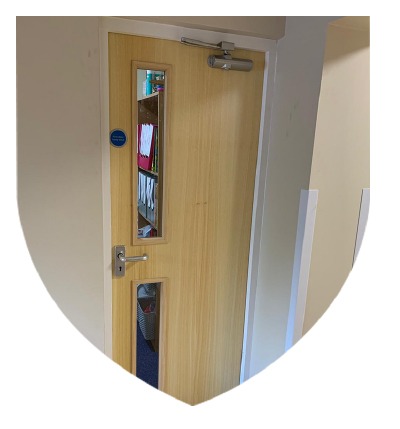
■ Is it worthwhile to upgrade or is a replacement a more effective
alternative?
■ What level of fire resistance is required?
■ Will an upgraded solution satisfy an Enforcement Officer or the
control authority?
■ Has each existing door leaf and frame the potential for being
upgraded?
■ Has the method of improving the burn-through resistance of the
door leaf been proven or does it need assessment by a specialist?
■ Has the door to frame gap been upgraded in terms of fit,
intumescent protection and smoke sealing?
■ Is the frame adequate and sufficiently well sealed into the wall?
■ Is the ironmongery appropriate for use on a fire resisting doorset?
If in doubt about any of the above, contact a competent fire door installer / inspector.
Certification Scheme
RES are Certified with BM-TRADA.
Scope of certification:
Q-Mark Fire Door Installation
Q-Mark Fire Door Maintenance
Q-Mark Fire Stopping Installation
BM TRADA is a leading provider of third-part certification for fire doors which is why we have invested in becoming a Certificated Company to their Q-Mark schemes.
The BM TRADA Q-Mark Fire Door Installation and Maintenance schemes have been designed to provide reassurance that fire doorsets are being installed and maintained correctly, in accordance with the manufacturer’s instructions or appropriate guidelines.
;)
;)