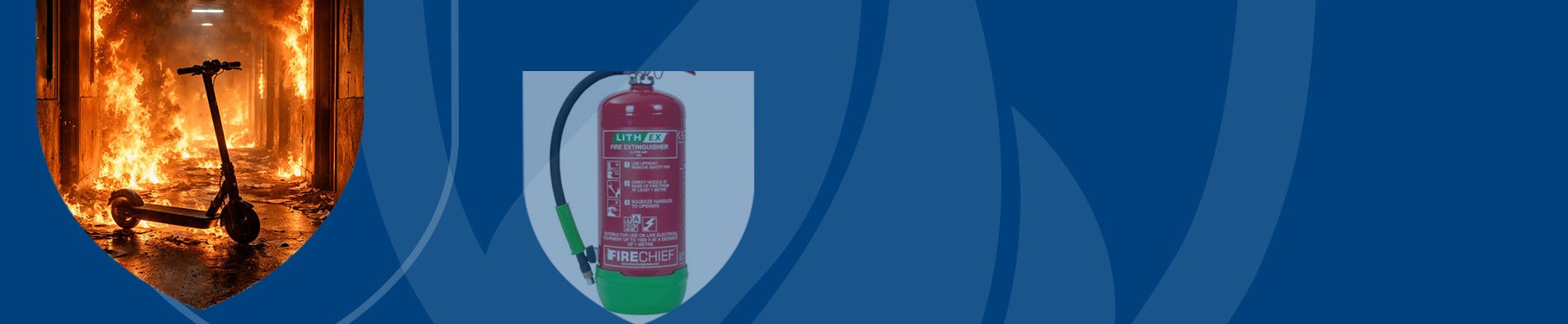
Class L – A new classification of fire
Class L is a new international fire classification introduced in January 2026 (BS ISO 3941:2026) specifically for fires involving lithium-ion battery cells and systems. This classification addresses the unique risk of thermal runaway, which causes intense, self-fuelling fires that are difficult to extinguish, prone to re-ignition, and release toxic fumes, impacting EVs, energy storage systems, and electronics.
The introduction of Class L marks a crucial update in fire safety regulations due to the significant growth in lithium-ion powered devices such as:
- Electric vehicles and e-bikes
- Energy storage systems
- Portable tools and equipment
- Consumer electronics
All of which require specialized detection and suppression strategies.
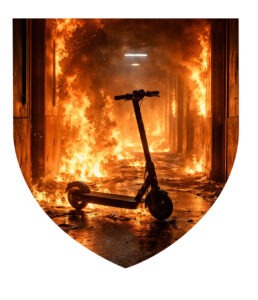
BS ISO 3941:2026 Classification of fires
The publication of BS ISO 3941:2026 Classification of fires is the first significant structural update to fire classification in many years, reflecting the increased presence of lithium-ion battery risks in today’s modern premises.
The introduction of Class L clarifies how these risks should be categorised within fire risk assessments. Although extinguisher fire ratings under BS EN 3 remain unchanged, the update strengthens the expectation that lithium-ion battery hazards are properly identified and addressed where present.
BS ISO 3941:2026 sets out the internationally aligned fire classification framework adopted in the UK. It introduces Class L alongside the existing fire classes:
- Class A – Solid combustibles (wood, paper, textiles, plastics)
- Class B – Flammable liquids (petrol, solvents, paints)
- Class C – Flammable gases (propane, butane, methane)
- Class D – Combustible metals (magnesium, lithium metal, sodium)
- Class F – Cooking oils and fats (deep fat fryers)
- Class L – Fires involving lithium-ion cells and battery packs (where no metallic lithium is present) Note: the introduction of Class L does not change existing extinguisher fire ratings under BS EN 3.
Why Lithium-Ion battery fires require their own Class L classification
Lithium-ion batteries are now embedded in everyday life, from handheld devices and power tools to e-bikes, e-scooters, warehouse equipment and electric vehicles. With that growth has come increased fire incidents across residential, commercial and industrial settings.
Lithium-ion battery fires are fundamentally different from traditional fuel-based fires.
Key characteristics include:
Thermal runaway: A self-sustaining chemical reaction within the battery cell that generates extreme heat.
Re-ignition risk: Even after apparent extinguishment.
High energy density: Resulting in rapid fire growth and intense heat release.
Toxicity: Production of toxic and potentially flammable off gases.
Oxygen-independent combustion: Unlike Class A fires, they do not rely on atmospheric oxygen in the same way.
These factors mean that conventional suppression strategies are not always appropriate or effective. The formal recognition of Class L acknowledges that lithium-ion battery fires require specific understanding and response strategies.
For more information on lithium-ion battery hazards, see our news article https://resfire.co.uk/london-fire-brigade-calls-for-urgent-e-bike-and-e-scooter-legislation/
Fire Risk Assessments and Class L fire risks
It is essential that premises Fire Risk Assessments (FRA) are reviewed in accordance with the Regulatory Reform (Fire Safety) Order 2005 (RRO) as soon as lithium-ion battery risks become present. Where lithium-ion battery hazards are present, they should be clearly identified within the premises FRA. Failure to adequately assess such risks could result in an incomplete assessment under Article 9 of the RRO. While British Standards are not law, enforcing authorities and courts may refer to them when considering whether a Responsible Person has acted reasonably and proportionately.
Lithium-ion battery fires behave differently from traditional combustible materials or flammable liquids and in particular, thermal runaway can lead to rapid heat release, re-ignition and complex fire development, hence the importance of identifying these risks in an FRA.
Previously, lithium-ion battery fires were typically considered under existing fire classes depending on the materials involved. The introduction of Class L provides clearer categorisation for risk assessment and fire safety planning purposes.
It does not invalidate existing classifications but clarifies how lithium-ion battery hazards should be described where present.
Electrical hazards clarification
Electrical hazards are not a separate fire class under UK fire classification standards.
- Electricity is an ignition source. Once isolated, the fire is classified according to the burning material involved, typically it will be a Class A fire risk.
- The term “Class E” is not recognised under current UK fire classification standards and should not be used in fire safety documentation, referring to ‘Electrical hazards’ instead.
- Class L should not be confused with “electrical hazards”; it specifically relates to lithium-ion battery cells and battery packs.
- Extinguishers suitable for use on live electrical equipment are selected based on their tested suitability for electrical risk, not because “electrical hazards” are a separate class.
See our separate Fire Extinguisher Guide and news article on Lithium-ion battery fire extinguishers https://resfire.co.uk/lithium-ion-battery-fire-extinguisher/
A complex topic made simple
Fire safety is a complex and evolving discipline. As new risks emerge, so too must our understanding along with the reviewing of premises FRA’s.
At RES Fire and Security, we believe that complex fire safety topics should be explained clearly and responsibly by competent, well-trained engineers and technicians supported by an industry accredited and certificated company. So, if you require any further information or advice, please contact us
For further guidance on Li ion battery fires see https://www.fia.uk.com/news/guidance-on-li-ion-battery-fires.html
;)
;)